Every investor in existing apartment communities has a stake in the answer to one question: how much new competition is coming? The supply pipeline is the single most powerful variable in apartment market fundamentals – more influential than interest rates, more influential than consumer confidence, and more directly controllable by the market itself than any macroeconomic force.
Multifamily Dive's September 8 report provides the most current, practitioner-sourced answer to that question – drawing directly on conversations with senior construction and development executives at three major national apartment developers. Their collective view, stated plainly and without much hedging: construction costs have moderated, but not fallen enough to make building pencil in most markets. That assessment, coming from the people who actually do the math on new apartment projects, is one of the most important supply-constraint confirmations available for apartment investors in existing communities.
Here is a precise breakdown of what the developers said, what the data shows, and why it matters for our portfolio and our investment thesis.
1) The Cost Picture: Moderated, Not Fixed
The Multifamily Dive article draws on three practitioner sources who describe the construction cost environment from their direct experience underwriting and delivering apartment projects:
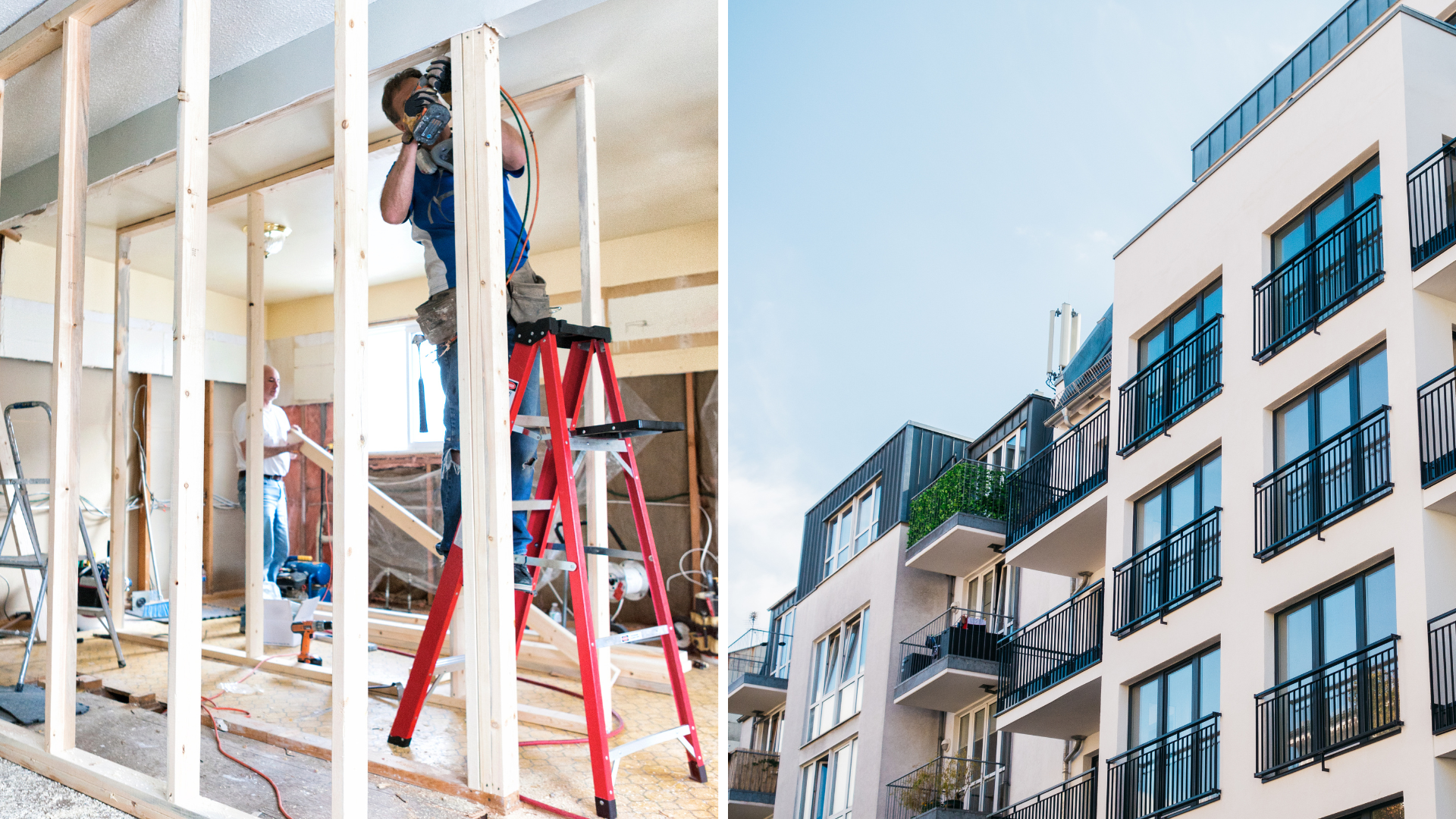
Southern Land Co. President of Construction Matt Ritsko described an "ever-changing environment" in which fluctuating project timelines, labor demand, and materials pricing have created genuine confusion within the construction industry. His key observation: contractors are responding to that volatility not by offering lower bids, but by building more contingency into their pricing to account for risk. The result is that even when headline materials prices moderate, the bids that developers receive don't necessarily fall by the same amount – because contractors are protecting themselves against the possibility that tariffs, labor costs, or supply chain disruptions push actual costs higher during the build period (Multifamily Dive, September 8, 2026).
Woodfield Development Senior Vice President Patrick Kassin offered the most direct summary of where costs stand relative to where they need to be: "We haven't seen costs come down enough to suddenly make a lot of markets work that didn't work six or 12 months ago." Materials pricing has become "more predictable" than a few years ago – but it stabilized at a much higher level after the early-2020s run-up, Kassin said. His outlook: "We're hopeful we'll continue to see material costs normalize. Stabilization is good, but we really need costs to continue working their way down." The implication is clear: the current level is not low enough to make most new development viable.
Middleburg Communities Head of Construction Tommy Gallagher found costs "relatively flat this year, with modest declines in specific markets" – with more competitive pricing from higher bid participation being offset by some higher materials and commodities costs. He confirmed the same dynamic Ritsko described: headline moderation doesn't necessarily translate into lower contract prices. The structural costs stabilized after a major run-up, and modest declines from those elevated levels don't restore development economics to the feasibility they had at pre-pandemic levels.
The aggregate picture across all three sources: costs are stable to modestly declining from their peak, but remain far above the levels at which broad new apartment development makes financial sense in most markets. This is not a supply problem that is resolving itself. It is a supply problem that has moderated at the margin while its structural drivers – elevated construction costs, high financing rates, expensive land, and achievable rents that still can't support the math – remain in place.
Investor takeaway: The construction cost picture confirms what the starts data has been showing for months: the economic barriers to new apartment development remain high despite some moderation from peak levels. Every developer in this piece is describing conditions that suppress new supply, and that sustained supply suppression is the most durable tailwind available to owners of existing apartment communities.
In simple terms: Building new apartments got a little cheaper over the past year, but not nearly enough. The people who build apartments for a living say costs are flat to slightly lower, but still too high to make most new projects financially viable. When contractors are adding extra buffer to their bids because they're worried about tariffs and labor costs, the projects that were barely workable before become unworkable. That means fewer new apartments, and more value in the ones that already exist.
2) Tariffs: The Wild Card That Keeps Underwriting Unstable
One of the most important details in the Multifamily Dive piece is the specific callout of tariff uncertainty as a distinct risk factor in new development underwriting. Woodfield's Kassin singled out tariffs and uncertainty around trade policy as adding to his concerns – particularly for projects that may not break ground for 12 to 18 months. This is a precise and important point that investors should understand clearly.
When a developer underwrites a new apartment project, they are making cost assumptions about materials – steel, aluminum, lumber, drywall, fixtures, appliances – that will be purchased 12-24 months in the future. Under normal conditions, historical cost trends provide a reasonable baseline for those estimates. In the current tariff environment, those estimates carry a specific new source of risk: if tariffs change materially during the construction period, the cost assumptions built into the underwriting may be wrong – in either direction.
Contractors are responding to this uncertainty in the way Ritsko described: rather than pricing to current conditions, they are adding contingency to their bids to protect against cost increases they can't control. That contingency makes the bids more expensive than the underlying material and labor costs would suggest – and makes it harder for developers to underwrite projects with confidence even when headline cost indices suggest some relief.
The tariff picture is also directly relevant to the replacement cost advantage we have discussed throughout the year. Each tariff-driven increase in the cost of steel, lumber, or drywall makes building a new apartment community more expensive than building that same community would have cost when we acquired our existing assets. The gap between our acquisition basis and current replacement cost – already significant after the 2021-2024 construction cost run-up – continues to widen with each layer of trade policy uncertainty. That widening gap is a compounding form of investor protection that does not require any specific market outcome to generate value.
Investor takeaway: Tariff uncertainty is not just a cost risk for developers – it is an advantage for investors who already own apartments below replacement cost. Every dollar that tariffs add to the cost of new construction is another dollar of margin between what we paid for an existing asset and what it would cost a competitor to build a new one. We bought before the run-up. We hold through the volatility. The gap compounds in our favor.
In simple terms: Nobody knows exactly how tariffs will change over the next 12 to 18 months, and that uncertainty makes it even harder to build new apartments. Contractors add a cushion to their bids just in case materials get more expensive during construction. That makes new projects cost more before anyone has spent a dollar. For people who already own apartments that were built before all these costs ran up, the comparison gets more and more favorable with every year.
3) The Four Inputs That Actually Determine Whether Projects Move Forward
Gallagher offered what may be the most useful piece of analytical clarity in the entire Multifamily Dive piece when he identified the inputs that actually determine whether a new apartment development gets built – and implicitly, how close we are to those inputs aligning favorably:
"Interest rates, capital markets, land basis and achievable rents still determine whether most projects move forward."
That four-part framework is worth examining against current conditions, because understanding where each input stands tells us how far away we are from a meaningful recovery in new apartment starts:
- Interest rates: Construction loans are floating-rate instruments. With the federal funds rate at 3.50%-3.75% and the 10-year Treasury holding above 4%, construction financing costs remain meaningfully higher than the pre-2022 era when the current generation of projects was underwritten. The Federal Reserve's own projections show limited rate relief through the end of 2026. This input has not materially improved.
- Capital markets: While Newmark's research cited by Jay Parsons shows 2026 on track for the second-biggest year ever in apartment debt originations, that capital is concentrated in refinancing of existing assets – not new construction. Construction lending remains more constrained and more expensive than stabilized financing, and equity requirements have increased as developer returns have compressed. This input has improved modestly but not enough to unlock broad new development.
- Land basis: Land prices in most Sun Belt metros remain elevated relative to what development economics can support. Unlike materials, which can respond relatively quickly to market conditions, land values are sticky on the way down. The landowners who paid peak prices in 2021-2022 are generally not willing to accept the discounts that would make current projects pencil. This input remains a significant constraint in most markets.
- Achievable rents: This is the most market-sensitive of the four inputs. In markets where rent growth is recovering – and CoStar raised its 2026 rent forecast from +0.5% to +1.9% in August – the achievable rent picture is improving at the margin. But the improvement needs to be sustained and meaningful before it unlocks development economics at current cost levels. This input is improving but is not yet at the level needed to make broad new development viable in most markets.
Gallagher's framework is valuable because it is honest about the hierarchy of inputs. Materials costs – the focus of much market commentary – are actually the least important of the four in determining whether a project moves forward. Interest rates, capital markets, land, and rents are the four gates that all have to be open simultaneously. Right now, at least two of the four – interest rates and land – remain significantly restrictive. The result is what the data shows: new multifamily starts at their lowest levels in years, and a supply pipeline that Multifamily Dive reports is set to bottom in 2027.
Investor takeaway: The four-input framework makes clear that new apartment supply will remain constrained for a predictable and definable reason – not because the market is permanently broken, but because the specific inputs that determine feasibility are not aligned simultaneously. When they do align, new development will recover – but that recovery is 18-36 months away in most markets, giving existing well-located apartment communities a clear window of supply advantage.
In simple terms: Building new apartments requires four things to line up at once: reasonable interest rates, available construction loans, affordable land, and rents high enough to justify the total cost. Right now, at least two of those four are still working against developers – interest rates and land prices. Until all four align, new apartment construction will stay limited. Based on where things stand today, most experts think that's still a year or two away from happening at scale.
4) The Selective Developer: Who Is Still Building and Why
The Multifamily Dive piece makes clear that the constraints above are not absolute – experienced, well-capitalized developers with strong market knowledge are still moving forward on selected projects. Understanding who is building and why matters for investors because it tells us what the coming supply will look like when it arrives.
Gallagher provided the clearest rationale for moving forward in the current environment: "Development cycles are long, and waiting for every variable to align can mean missing the window when construction pricing is most favorable. For projects with strong fundamentals, we see real value in moving now, ahead of a supply pipeline that's expected to stay constrained." Middleburg expects to break ground on more projects in 2026 than 2025 – not because conditions are broadly favorable, but because moving ahead of the recovery positions a first-to-market developer to lease up into improving fundamentals.
Alliance's Hiemenz noted that in select metros where demand and absorption are favorable, costs have fallen enough to make development worthwhile. The developer projects breaking ground on roughly the same number of projects as 2025 – not a meaningful expansion. Woodfield is being explicitly "disciplined" and will not start projects simply to maintain volume: "If we continue to see improvement in both the capital markets and construction pricing, I think you'll see more projects move forward."
The pattern across all three developers: selective, disciplined starts on projects with exceptional fundamentals – not broad market recovery. These are experienced operators making calculated first-mover bets in specific submarkets where the math works, not signals of a general return to pre-2022 development volumes.
For existing apartment owners, this pattern has two important implications. First, the new supply that does arrive will be highly selective – Class A in proven high-demand submarkets – which limits its competitive impact on Class B communities in the same markets. Class B faces no new competing supply being built at any meaningful scale; virtually all new starts are Class A luxury product, as Dodge Construction Network data has confirmed throughout the year. Second, the volume of new deliveries will remain below the levels that created the 2022-2025 supply pressure for at least the next two to three years, giving the existing stock time to absorb the residual concession pressure and restore pricing power.
Investor takeaway: The selective developer strategy confirmed by these three sources is not a precursor to broad supply recovery – it is a niche response by experienced operators in specific high-demand locations. The volume of new apartment supply is not recovering materially in 2026 or 2027. That means the window of supply constraint that benefits existing apartment owners remains open for longer than the current market has priced.
In simple terms: A few experienced developers are moving ahead on carefully chosen projects because they want to be first to market when conditions improve. But they're being very selective – they're not starting projects just to stay busy. The total number of new apartments being built is still way below what the market was absorbing in 2022-2025. That means the pressure from new competition on existing apartments will stay manageable for at least a few more years, even as the best operators pick their spots.
5) New Supply Is Bottoming in 2027: Why That Timeline Matters
A separate Multifamily Dive report published the same week confirmed the supply pipeline trajectory explicitly: multifamily new supply is set to bottom out in 2027. That forecast, based on current construction starts and project timelines, gives investors a specific and data-supported window to understand.
The mechanics are straightforward. Apartment construction has a typical lead time of 18-24 months from groundbreaking to first delivery. The dramatic decline in multifamily starts that we documented in our housing starts piece earlier this summer – down to a six-year low in May 2026, with multifamily starts falling 40.2% in a single month – will translate into dramatically fewer deliveries in the 2027-2028 window. The pipeline that exists today simply doesn't contain enough projects to maintain current delivery volumes.
What does a 2027 supply bottom mean for apartment investors in practical terms?
- Concession burn-off accelerates. As the volume of new lease-up buildings competing for residents declines, the need for concession packages diminishes. Class A buildings that stabilize stop offering free rent. That reduced competition flows downstream to Class B communities, which can gradually reduce their own concession exposure. CoStar raised its 2026 rent forecast from +0.5% to +1.9% citing this dynamic – and that improvement is still in its early stages.
- Vacancy continues to tighten. Three independent data providers – CoStar, RealPage, and Apartment List – all confirmed the first year-over-year vacancy improvement in 17 quarters as of Q2 2026 (Jay Parsons, August 20, 2026). As deliveries fall toward 2027, the pace of vacancy improvement should accelerate.
- Pricing power returns progressively. Gallagher's comment about being "first to market ahead of a supply pipeline that's expected to stay constrained" is an explicit acknowledgment that 2027-2028 will be a tighter supply environment. For existing operators, that means the market-level pricing power that new developers are positioning to capture will first flow to the communities that are already stabilized and occupied – which is us.
- Replacement cost keeps rising. Every quarter that construction costs remain elevated and new starts remain suppressed, the gap between what we paid for existing communities and what it costs to build new competition widens further. The developers interviewed in the Multifamily Dive piece are confirming that this cost structure persists – which means our basis advantage compounds with time rather than eroding with it.
Investor takeaway: The 2027 supply bottom is not just a market forecast – it is a specific timeline for when the benefits of current supply suppression become most pronounced. Communities that are stabilized, well-operated, and positioned in markets with strong employment and domestic in-migration will be first in line to capture the improved pricing environment that a supply-bottoming market produces.
In simple terms: Based on how few new apartments are being started right now, the industry expects the number of new ones arriving each year to hit its lowest point in 2027. After that, it will gradually start recovering. For people who own apartments today, that 2027 bottom is the moment when competition from new supply is at its least intense – and when the pricing power that comes from a tight market is at its strongest. We're managing toward that window.
6) What This Means for Our Portfolio and Strategy
The Multifamily Dive construction cost piece confirms the supply thesis at every level, and it connects directly to each element of how we have built and are managing our portfolio.
Below-replacement-cost basis: Every developer interviewed in this piece is describing why it is difficult and expensive to build a new apartment community. Those difficulties – high interest rates, elevated land basis, stable-but-elevated materials costs, tariff uncertainty – are the same factors that make the gap between our acquisition price and current replacement cost wider today than when we bought. We acquired our communities at prices that reflected a more favorable construction economics environment. The communities that someone would build to compete with us would cost dramatically more – and based on the developer commentary in this piece, most markets still don't support that cost.
Current markets: Atlanta, Tampa, and Charleston all fit the profile of markets where the supply constraint thesis is working. Charleston cracked the national top 20 for rent growth in August with rents up over 3% (Jay Parsons, August 20, 2026) – the direct result of a supply pipeline that is 72% below peak (MMG Real Estate Advisors). Tampa is showing 220-280 basis point improvement in year-over-year rent change (Parsons, August 2026). Atlanta is projecting the second-highest effective rent growth of any major U.S. metro in 2026 (Marcus & Millichap). These are not coincidences – they are the outcomes of markets where new supply has been suppressed and existing communities are capturing the benefit.
Target expansion markets: Dallas--Fort Worth and Houston are the markets where we are actively pursuing entry. Both saw 100+ basis point upward swings in year-over-year rent change through the summer (Parsons, August 2026). Both have exceptionally deep and diverse employment bases. And both have experienced the supply wave that is now clearing – meaning the 2027 supply bottom that Multifamily Dive documents will produce the same improving pricing environment in Texas that we are already seeing in Atlanta and Charleston.
Value-add capital investment: Our renovation playbook – kitchens, LVP flooring, lighting, smart access, pet amenities, package rooms – creates rent premiums that are more sustainable in a supply-constrained environment. When the developers confirm that the alternative to our renovated units is not a new Class B building (which isn't being built), but an older unrenovated competitor or a Class A building requiring a significant rent premium, our value proposition to residents is unusually strong.
Investor takeaway: The construction cost data is not just market context – it is direct confirmation of the supply-constraint thesis that underpins our investment strategy. The developers who would compete with us by building new communities are telling us, in their own words, that the cost structure doesn't support that competition in most markets. We don't need macro tailwinds to benefit from that – we simply need to continue operating our existing communities well as the supply that has been competing with us continues to be absorbed.
In simple terms: The people who would build apartments to compete with us are telling us directly: it's too expensive to build in most places right now. That means fewer new apartments competing for our residents. Our existing communities – bought at prices before this cost run-up, renovated to make them genuinely attractive – are in a strong competitive position. Charleston is already seeing the result. Atlanta and Tampa are close behind. And the Texas markets we're targeting are on the same trajectory.
7) What We're Watching Next
- Monthly housing starts data: The Census Bureau's monthly report tracks new multifamily starts, which translate into deliveries 18-24 months later. After May's six-year low, we watch subsequent months to confirm whether the trend is sustained or whether there is a seasonal rebound. Any sustained reading below 350,000 annualized multifamily starts would reinforce the 2027 supply bottom thesis.
- Tariff developments: Kassin specifically flagged tariff uncertainty as a 12-18 month underwriting risk. Any significant changes in tariff policy on steel, aluminum, lumber, or imported fixtures would affect both materials pricing and the confidence with which developers can underwrite new projects. We watch trade policy closely as both a construction cost input and a replacement cost variable.
- Construction loan availability and pricing: Gallagher identified capital markets as one of the four key inputs to development feasibility. Any improvement in construction lending terms – lower rates, higher LTVs, more active lenders – would be an early signal that new supply could recover faster than current starts data implies. We monitor this through Newmark's quarterly multifamily capital markets report and direct conversations with construction lenders.
- Concession data in our markets: The mechanism connecting supply constraint to improved returns is concession burn-off. As the new lease-up buildings in our markets stabilize and reduce their free-rent offers, our effective rents improve. We track concession usage at the submarket level monthly in Atlanta, Tampa, and Charleston to monitor the pace of this process.
- Atlanta and Charleston rent data: Both markets are in positive rent growth territory or trending that way – the leading edge of what the supply constraint thesis produces. We watch the monthly rent data from CoStar, Yardi, and Apartment List for our specific markets to confirm the improvement is sustained and deepening.
Our 2026 Playbook
- Current markets: Atlanta, Tampa, and Charleston – markets where the supply constraint thesis is actively producing results, with Charleston in the national top 20 for rent growth and Atlanta projecting the second-highest effective rent growth of any major metro in 2026.
- Target expansion markets: Dallas–Fort Worth and Houston – markets with exceptional employment depth, improving rent momentum, and supply pipelines trending toward the same bottoming that has produced results in our current portfolio.
- Acquisition edge: Below replacement cost with day-one or near-term cash flow. The developers interviewed this week confirmed that replacement cost is still high and rising – which means our basis advantage continues to compound.
- Value creation: Livability-first capex: kitchens, LVP flooring, lighting, bath refresh, smart access, pet amenities, package rooms, safety lighting, and landscaping. In a supply-constrained environment, renovated communities with genuine livability advantages face less competition and command more sustainable rent premiums.
- Operations: Renewal-centric mindset, responsive maintenance, transparent fees, and disciplined pricing. The supply constraint that limits new development also reduces the alternatives available to residents considering a move – making retention-focused operations more valuable, not less.
- Capital structure: Conservative leverage, assumption-first where it makes sense, and multiple exit paths (hold/refi/sell) based on data – not headlines.
The Bottom Line
Three major apartment developers just explained to Multifamily Dive why they're not building very many new apartments right now. Costs have come down a little from their peak, but not enough to make most new projects financially viable. Interest rates are still too high. Land is still too expensive. Tariffs on materials like steel and lumber are adding unpredictability to bids. And rents haven't risen enough to support the full cost of new construction in most markets. A few disciplined developers are selectively moving forward on projects with exceptional fundamentals – but the overall volume of new apartment construction is still near its lowest level in years, with the supply pipeline expected to bottom in 2027. For investors in existing apartment communities, this is directly good news. The competition from new supply that drove concessions and pressured rents over the past three years is not being replaced at the same rate. As those existing new buildings fill up and stop offering free rent, and as fewer new ones arrive behind them, the apartments that already exist become more valuable. That process is already showing up in markets like Charleston, which cracked the national top 20 for rent growth in August. Atlanta and Tampa are on the same trajectory. And the Texas markets we're targeting are positioned for the same improvement as their supply pipelines clear over the next 12-18 months.
If you'd like to be added to our investor list to see future opportunities, please schedule a call with our team.



2.png)



34.png)
7.png)
ujo.png)
_cost%20of%20living.png)
cdvb.png)
fj.png)
fh.png)
bhn%2C.png)
hn.png)
rt.png)

uj.png)
vfd.png)
vfdnh.png)

bhn.png)
4e.png)
vcfcb.png)
gbtr.png)

mj.png)
nh.png)

klo.png)
_war.png)
mkj%20(2).png)


ggj.png)

p.png)

ok.png)
-n%5D.png)