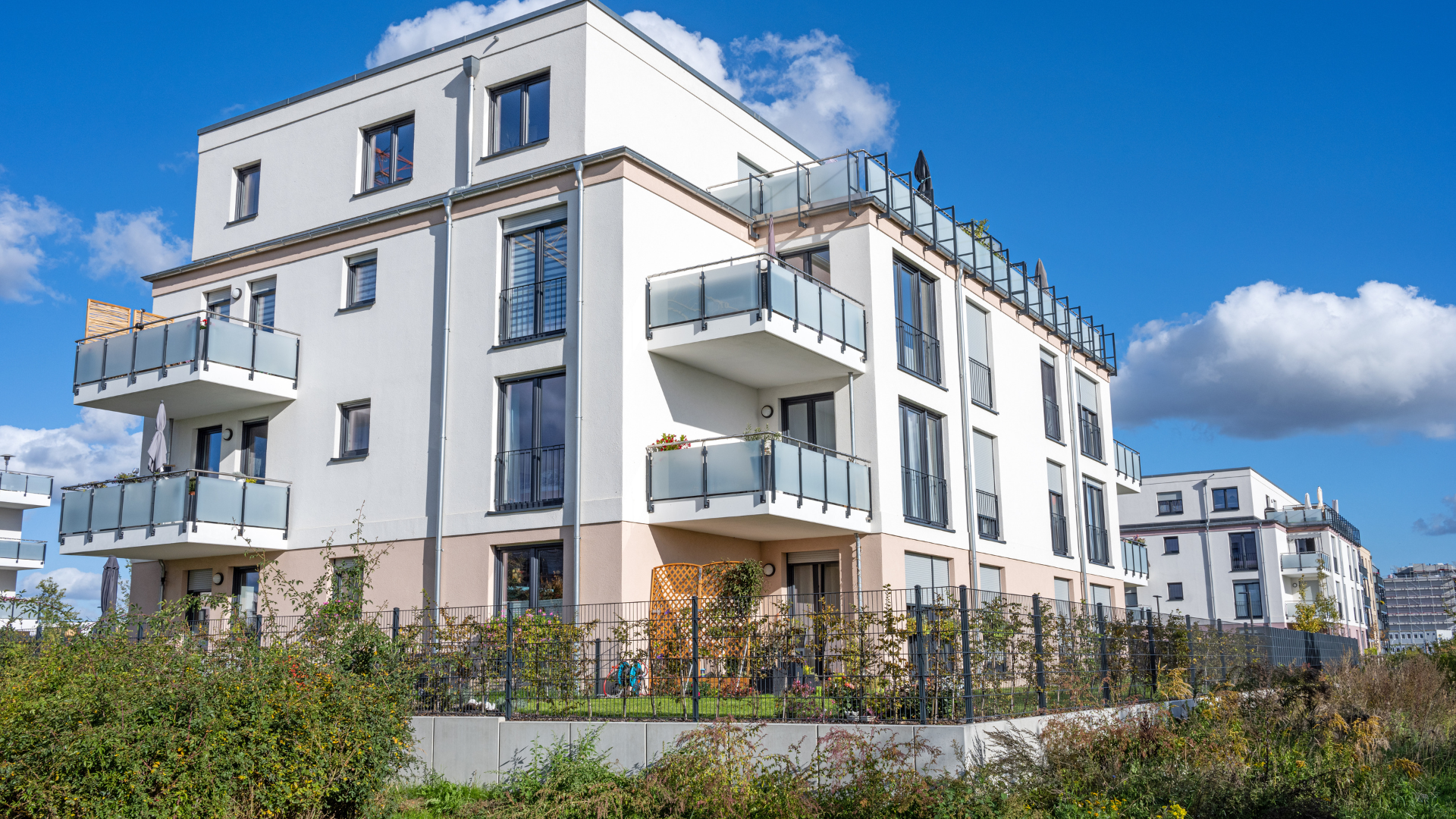
The most powerful demand driver for apartment investing is not a rate cycle, a demographic bulge, or a construction pipeline calculation. It is something more fundamental: millions of Americans who are rationally concluding that renting a quality apartment is their best housing option – not as a temporary stepping stone, but as a long-term, financially intelligent decision.
New research from the McKinsey Institute for Economic Mobility, published in August 2026 and highlighted by GlobeSt, provides the clearest current picture of where that conclusion is coming from. Their survey of thousands of Americans across income levels, geographies, and age groups finds that 60% rank the rising cost of living as one of their top three barriers to economic progress. Housing sits at the center of that burden. And the downstream effects – on household formation, residential mobility, and the rental market – are reshaping the American housing landscape in ways that have direct and durable implications for multifamily investing.
This piece examines the McKinsey findings alongside the latest data from Harvard, NAHB, the New York Fed, and others – and connects the human story of economic pressure to the investment thesis at the core of what we do at Faris Capital Partners.
1) The McKinsey Finding: Cost of Living Is America's No. 1 Economic Obstacle
The McKinsey Institute for Economic Mobility's August 2026 report, "In Pursuit of Progress: Americans' Aspirations for Economic Mobility," is one of the most comprehensive surveys of American economic sentiment published this year. Its headline finding is striking in both its scale and its breadth:
60% of survey respondents rank the rising cost of living as among the top three barriers to their economic progress. This is not a finding about poverty or the lowest-income Americans – it cuts across the full income distribution. McKinsey explicitly notes: "Notably, these concerns are not isolated to lower-income respondents. Across places, age groups, income levels, and races and ethnicities, affordability consistently emerges as the most frequently cited barrier to getting ahead."
Perhaps most striking: respondents earning over $150,000 are slightly more likely than those earning under $50,000 to cite rising costs as a top-three barrier (59% vs. 57%). This tells us something important: the housing and cost-of-living crisis is not a story about the poor. It is a story about the broad American middle class – the households earning $60,000, $80,000, $100,000 – who are watching their income absorbed by housing, groceries, transportation, and childcare at a rate that leaves little room for wealth accumulation, saving, or improving their position.
McKinsey further notes that respondents are "particularly sensitive to costs they encounter in their daily lives." Housing, as the single largest household expense – representing 33.4% of total household expenditures on average (BLS Consumer Expenditure Survey 2024) – sits at the very top of that daily-cost sensitivity. When housing takes too large a share of income, everything else – savings, investment, mobility, education – becomes constrained.
Investor takeaway: The cost-of-living burden McKinsey documents is the macro backdrop that makes the apartment investment thesis durable. When housing costs consume an untenable share of household income, the households most affected don't disappear – they make rational choices about where and how to live. Increasingly, those choices favor quality rental communities at attainable prices over the financial strain of homeownership or the instability of inadequate housing.
In simple terms: A major study just found that six out of ten Americans say rising costs are one of the biggest things holding them back from getting ahead. And this isn't just a problem for people with low incomes – people earning good salaries are feeling it too. When housing takes up a third of every dollar you earn, there's not much left over for saving, investing, or improving your life. That financial pressure is reshaping how Americans think about housing – and who they rent from.
2) The Homeownership Math: Why Buying Has Become Out of Reach for Millions
The McKinsey research doesn't operate in a vacuum – it is confirmed and amplified by the most current housing affordability data available, which tells a story of homeownership becoming structurally inaccessible for a large and growing share of American households.
The NAHB/Wells Fargo Cost of Housing Index for Q1 2026 provides the most precise current picture: a family earning the nation's median income of $106,800 needs 32% of that income to cover the mortgage payment on a median-priced new home. That 32% figure is already above the traditional 30% affordability threshold, and it assumes the family can afford the down payment, which a large share cannot.
The situation is dramatically worse lower on the income scale: families earning half the median income – $53,400 – would need to spend 65% of their earnings to cover the same mortgage payment. As NAHB Chief Economist Robert Dietz noted at the Q1 release: "The first quarter CHI data shows that far too many families remain cost-burdened even as housing affordability is slowly trending in the right direction." The slow improvement he acknowledges is real, but the starting point is so far from affordable that meaningful change is years away even under optimistic conditions.
The Best Interest Financial Future Home Buyer Survey (April 2026) documents the barrier from the buyer's perspective: 95% of aspiring homebuyers face at least one significant barrier to purchase. The most common obstacle is high home prices, cited by 48% of respondents as too prohibitive. High mortgage rates (33%) and inability to save for a down payment (33%) follow closely. These are not one-time obstacles that go away when confidence recovers, they are structural barriers created by two decades of underbuilding, a pandemic price surge, and a rate environment that has reset the monthly payment calculus permanently for most buyers.
The data on homeownership aspirations is even more revealing. The New York Federal Reserve's 2026 Annual Housing Survey found that only 13.4% of renters believe they will ever be able to afford a home – a record low, down from 15% in 2023 and 20.8% at its 2014 peak. This is not irrational pessimism. It is a rational assessment by millions of households who have run the numbers – looked at home prices, looked at their savings, looked at mortgage rates, looked at their income – and concluded that homeownership is not in their realistic future. When that conclusion is reached by 86.6% of renters, the implication for apartment demand is profound: the rental market is no longer primarily a waiting room for homeownership. It is a permanent housing solution for a large and growing share of the American middle class.
Investor takeaway: Homeownership affordability data is not just a social policy concern, it is the most powerful structural demand driver for quality rental housing. Every household that concludes homeownership is out of reach is a potential long-term renter. At 13.4% believing they can ever buy, down from 20.8% a decade ago, the rental pool is permanently larger than the pre-crisis housing market assumed. That is not a temporary condition. It is the new baseline.
In simple terms: The numbers on buying a home are brutal. A family earning a typical income needs to spend 32% of their paycheck just for the mortgage payment on an average home, and that doesn't include property taxes, insurance, or maintenance. Lower-income families would need to spend 65% of their income. And only 13% of renters now believe they'll ever be able to afford to buy, the lowest share ever recorded. This isn't people giving up on a dream. It's people doing math and getting an honest answer. And the honest answer for a large and growing share of Americans is: renting a well-run apartment is the right choice.
3) The Mobility Trap: When You Can't Afford to Move, You Can't Get Ahead
The McKinsey mobility research highlights a consequence of housing costs that is less discussed but deeply important for understanding both the social stakes and the investment implications: high housing costs don't just make people poor where they are – they prevent them from going somewhere better.
Harvard JCHS's State of the Nation's Housing 2026 is explicit on this point: residential mobility has reached a record low in the United States. The report frames this as a direct consequence of rising housing costs – when moving requires giving up an affordable unit, incurring moving costs, paying first/last/deposit on a new lease, or entering a more expensive housing market, the financial barrier to relocation is simply too high for many households to clear. The housing market has become a trap for millions of Americans who are stuck in jobs that don't advance them, cities that don't suit them, or situations they'd leave if the cost of leaving weren't prohibitive.
The moveBuddha 2026 Moving Survey provides the consumer-level confirmation: nearly twice as many Americans say they'd move wherever the cost of living is low compared to moving for lifestyle goals, but most say they can't afford to act on that preference. The survey describes a nation of people who have mentally accepted a constrained geography because the financial friction of movement is too high. As moveBuddha notes: "Moving is increasingly becoming a high-cost risk, and Americans aren't desperate to move. In fact, a lot of Americans are living in a version of 'fine' that's shaped by their checking balances."
For apartment investors, the mobility trap has a direct and favorable implication: residents who find a quality apartment at a fair price in a city with good jobs are less likely to leave, not because they're incapable of moving, but because the financial and logistical cost of moving provides a genuine reason to stay. In a normal housing market, a resident might move every two to three years as life circumstances evolved. In today's market, that resident is more likely to renew their lease, avoid the financial friction of a move, and build a longer-term relationship with a community they trust.
This dynamic reinforces the renewal-centric operating model we apply to every community. When we invest in maintenance responsiveness, transparent fees, livability upgrades, and genuine resident relationships, we are creating the kind of community that residents don't leave even when they theoretically could, because leaving is costly and the alternative might not be better. In a mobility-constrained market, operational excellence converts to retention at higher rates than it would in a fluid market.
Investor takeaway: Residential mobility at a record low is not just a social statistic, it is a lease renewal driver. The financial friction of moving has never been higher relative to household incomes. Well-run apartment communities in job-rich markets that deliver genuine value for the rent are capturing longer tenancies than any prior cycle would have suggested possible. That translates directly to lower turnover costs, more stable cash flows, and stronger renewal pricing.
In simple terms: Moving is expensive – first month, last month, deposit, moving truck, time off work, new utility setups. When housing costs are high everywhere, the financial case for staying put gets stronger. Americans are less mobile now than at any point in recorded history, largely because they can't afford the cost and risk of moving. For apartment owners, that means residents who find a place they like and can afford are more likely to stay for years, which is exactly what you want.
4) What Middle-Income Renters Actually Want – And Why It Matters for Value-Add Investing
The McKinsey research goes beyond documenting the cost burden, it provides insight into what middle-income renters value most when cost pressure is their primary concern. Understanding that preference profile is essential for aligning the value-add investment strategy with the actual desires of the resident population.
McKinsey found that cost-burdened Americans are "particularly sensitive to costs they encounter in their daily lives." This sensitivity has two practical implications for how they choose and stay in housing:
They pay a premium for genuine livability, not luxury. A middle-income renter under cost pressure is not looking for a rooftop pool or a co-working lounge. They are looking for a kitchen that works, flooring that isn't worn out, lighting that feels modern, access technology that doesn't fail, and maintenance that responds within 24 hours. These are the improvements that affect daily life in visible, tangible ways – and middle-income renters living on constrained budgets are acutely aware of what makes their home feel worth what they pay for it. Our renovation playbook – kitchens, LVP flooring, lighting, smart access, pet amenities, package rooms – is not a luxury positioning strategy. It is a practical livability strategy designed for exactly this resident.
They are sensitive to financial surprises. Cost-burdened households have limited buffers. Hidden fees, unpredictable utility charges, lease clauses that produce unexpected costs – all of these erode trust and increase the probability of non-renewal. McKinsey's finding that 50% of Americans with financial goals fear cost-of-living increases will prevent them from achieving those goals (AICPA/Harris Poll, January 2026) tells us that the residents in our communities are actively managing tight budgets. Transparent pricing, honest fees, and no surprises are not just good ethics – they are the operational practices that convert cost-burdened renters into long-term, loyal residents.
They value stability over novelty. A household making difficult trade-offs to afford housing does not want to move frequently, re-qualify for a new lease, or navigate another application process. The stability of a well-run, familiar community – where management is known, maintenance is reliable, and the rent is fair – has genuine value for cost-constrained households that it doesn't have for more affluent renters who treat their apartment more transactionally. This is why our renewal rates outperform market averages: we are serving residents for whom stability itself is a benefit.
Investor takeaway: The value-add strategy is not simply about physical improvements – it is about building the kind of community that middle-income, cost-conscious renters choose and keep choosing. Our capex targets what residents feel every day. Our operations eliminate the surprises and friction that erode trust. Our renewal focus captures the stability premium that cost-burdened households will pay for. This alignment between what the research says renters value and what we actually deliver is not a coincidence – it is the operating philosophy we have applied consistently.
In simple terms: People who are stretching to afford housing aren't looking for fancy amenities, they're looking for things that make their daily life easier: a good kitchen, reliable maintenance, fair pricing, no hidden fees. They want to feel like the place they pay for every month is worth it. And when they find that, they stay. That's who we build our apartments for, and that's why our resident retention has held up even in a challenging market environment.
5) The Geographic Angle: Why Our Markets Are Where Cost-Burdened Renters Are Moving
The McKinsey mobility research doesn't just document the cost burden, it shows where Americans who can move are going. And the pattern is entirely consistent with the market selection logic we've applied throughout our history as a firm.
The moveBuddha 2026 survey found that nearly twice as many Americans would now consider moving "wherever the cost of living is low" compared to just two years ago. The Sunbelt corridor – Georgia, Florida, the Carolinas – continues to capture the largest share of domestic migration precisely because it offers lower housing costs, strong job markets, and no state income tax relative to the high-cost coastal markets where these households are often coming from.
The Harvard JCHS State of the Nation's Housing 2026 notes that while residential mobility is at a record low overall, the moves that do happen are overwhelmingly to markets with better affordability – a pattern that has defined the Sun Belt's growth for a decade and that shows no sign of reversing. The households moving to our markets are not randomly distributed – they are the upwardly mobile middle-income earners who have made the rational calculation that their economic prospects are better in Atlanta, Tampa, or Charleston than where they came from.
- Atlanta continues to attract both younger professionals and established middle-income households, with the state's pro-business environment, expanding tech sector (now the nation's leading data center market per Georgia State University), and affordable cost of living relative to coastal alternatives drawing exactly the cost-conscious, mobility-motivated renter McKinsey describes.
- Tampa's domestic in-migration is driven substantially by households making the affordability calculation, choosing Florida's lower tax burden and cost structure over Northeast and Midwest alternatives. These households arrive as renters and, per the lock-in effect we've covered throughout the year, tend to stay as renters even when homeownership aspirations exist.
- Charleston's growth – fueled by corporate investment, a growing tech sector, and Boeing's ongoing operations – is bringing high-wage professional renters who represent some of the most financially stable residents available. Google's $9 billion data center commitment for 2026-2027 is a direct pipeline of the kind of middle-to-upper-income renter who chooses quality Class B over Class A luxury on pure value grounds.
Investor takeaway: Our market selection is not just about supply-demand mechanics, it reflects a precise alignment with the geographic preferences of the cost-burdened, mobility-seeking American middle class. The households McKinsey identifies as feeling most constrained by housing costs are the same households choosing to relocate to our markets. We are in the path of the migration that the affordability crisis is driving.
In simple terms: People who want to move somewhere more affordable are mostly heading to Georgia, Florida, and the Carolinas – which happen to be exactly where we invest. The households making that move tend to earn decent incomes, value quality, and are looking for a well-run apartment at a fair price. We're not trying to catch that trend, we're already positioned for it.
6) The Long-Term Implication: A Structural Shift in the Rental Market
The McKinsey research, taken together with the JCHS, NAHB, and New York Fed data, points to something more significant than a cyclical housing affordability problem. It describes a structural shift in the American housing market that is redefining who rents, why they rent, and how long they rent – with consequences that extend well beyond the current rate cycle.
The traditional model of American housing – you rent while young, save, then buy – has been disrupted at its foundation. The median age of first-time homebuyers is now 38 – seven years older than the pre-pandemic average (National Association of Realtors). The share of renters who believe they will ever buy has fallen from 20.8% to 13.4% in a decade. Residential mobility is at a record low. And the McKinsey data shows that cost pressure is not expected to ease soon: 50% of Americans fear cost-of-living increases will prevent them from achieving their 2026 financial goals (AICPA/Harris Poll).
What does a housing market look like when a substantial, growing share of middle-income Americans have permanently, or at least indefinitely, deferred homeownership? It looks like a rental market with deeper, more financially stable demand than any prior cycle has produced. It looks like residents who stay longer, pay more reliably, and place a greater premium on the quality and stability of the community they live in. It looks, in other words, like the ideal operating environment for well-run, well-located, value-add Class B apartment communities.
The McKinsey Institute for Economic Mobility estimates that closing the affordable housing gap would generate $2 trillion in additional economic output over ten years and 1.7 million new jobs. That is a powerful statement about the economic weight of the housing shortage, and a clear-eyed acknowledgment that the gap will not close quickly. The structural forces maintaining it – construction costs, regulatory barriers, financing constraints, and labor shortages – are precisely the forces we have been documenting throughout 2026. The shortage that is the bedrock demand driver for apartment investing is years from resolution.
Investor takeaway: The McKinsey research is, at its core, a long-duration demand thesis for quality attainable rental housing. The structural forces creating that demand – unaffordable homeownership, record-low mobility, cost-burdened middle-income households, and an enormous housing shortage – are not going to resolve in a year or two. Investors who position in this market now, with the right assets in the right locations at the right basis, are aligning themselves with a demand foundation that compounds with time rather than eroding with it.
In simple terms: For a long time, renting was something Americans did while they saved up to buy. That model is changing. More and more middle-income earners are staying renters indefinitely – not by choice, but because the math of buying just doesn't work. That means the pool of renters is bigger, older, better-compensated, and more stable than it's ever been. They're looking for quality, they value stability, and they're staying longer. That's not a one-year story. It's a structural shift in how America houses itself, and it's one of the most powerful long-term arguments for owning the right kind of apartment communities.
7) What We're Watching Next
- McKinsey Institute for Economic Mobility – follow-on research: The August 2026 report focuses on the barriers to mobility. McKinsey's subsequent work will likely address the geographic and policy dimensions of where mobility is improving or worsening – directly relevant to our market selection logic.
- Harvard JCHS State of the Nation's Housing 2027 (June 2027): The annual JCHS report is the most authoritative benchmark for housing affordability trends. We will track whether cost burdens continue to spread up the income distribution as McKinsey's data suggests, and whether residential mobility continues its record-low trajectory.
- New York Fed Annual Housing Survey (next release): The 13.4% of renters who believe homeownership is achievable is the single most direct measure of permanent renter sentiment. Any movement in this figure, up or down, would be a significant signal for long-term rental demand depth.
- NAHB/Wells Fargo CHI quarterly: The Cost of Housing Index provides the most current read on what share of households can afford median-priced homes. Even modest improvement in this metric would reduce the pipeline of permanent renters; further deterioration would deepen it.
- Mobility data by market: We track net domestic in-migration to our five target markets monthly using Census Bureau and IRS data. The flow of cost-motivated movers to Atlanta, Tampa, and Charleston is the leading indicator of renter household formation in our specific submarkets.
Our 2026 Playbook
- Markets: Atlanta, Tampa and Charleston – the markets where cost-motivated domestic migration is strongest and where middle-income renter demand is most durable.
- Acquisition edge: Below replacement cost with day-one or near-term cash flow. In a market where housing costs are the primary barrier to economic progress, attainable pricing is a competitive moat, not just a positioning choice.
- Value creation: Livability-first capex: kitchens, LVP flooring, lighting, bath refresh, smart access, pet amenities, package rooms, safety lighting, and landscaping. The McKinsey research is specific: middle-income, cost-sensitive renters respond to improvements that affect their daily lives, not luxury amenities.
- Operations: Renewal-centric mindset, responsive maintenance, transparent fees, and no surprises. Cost-burdened residents value financial predictability as much as physical quality, and our operating model delivers both.
- Capital structure: Conservative leverage, assumption-first where it makes sense, and multiple exit paths (hold/refi/sell) based on data – not headlines.
Bottom Line
A major McKinsey study just confirmed what millions of Americans already know: the cost of living, led by housing, has become the biggest barrier to getting ahead. Six out of ten Americans say rising costs are one of their top three obstacles to economic progress, and this problem cuts across all income levels. At the same time, homeownership has become genuinely out of reach for most middle-income families: you need 32% of a typical income just to cover the mortgage on an average home, only 13% of renters believe they'll ever be able to buy, and residential mobility has hit a record low because moving costs too much. What this means for apartment investing is direct: millions of middle-income Americans are making a rational decision to rent quality apartments long-term, not as a temporary measure, but as the practical housing choice that makes sense for their financial lives. They're staying longer, valuing stability, and choosing communities where the rent is fair and the management is responsive. That is a structural shift in American housing – not a rate cycle – and it creates a durable, long-term foundation of demand for the kind of apartment communities we invest in.
If you'd like to be added to our investor list to see future opportunities, please schedule a call with our team.



_cost%20of%20living.png)



vg.png)

d.png)

2.png)
34.png)
7.png)
ujo.png)
cdvb.png)
fj.png)
fh.png)
bhn%2C.png)
hn.png)
rt.png)
uj.png)
vfd.png)
vfdnh.png)

bhn.png)
4e.png)
vcfcb.png)
gbtr.png)

mj.png)
nh.png)

klo.png)
_war.png)
mkj%20(2).png)


ggj.png)

p.png)

ok.png)
-n%5D.png)