The macro headlines are easy to recite: slowing national job growth, rising recession probability estimates, tariff-driven uncertainty, a Federal Reserve on hold. For investors looking at a map of where to put capital, that headline environment can feel like a reason to pause.
But headline risk and ground-level economic reality are not always the same thing. And for investors in multifamily real estate, where returns are driven by the depth of the local renter pool, not the S&P 500, the question that actually matters is not "what is the national job market doing?" It's "what is happening in the specific metro where this apartment community sits?"
The answer in our five target markets— Dallas–Fort Worth, Houston, Atlanta, Tampa, and Charleston— is meaningfully better than the national narrative suggests. Here is the ground-level jobs story, market by market, supported by the latest available data.
1) Why Local Jobs Are the Right Lens for Apartment Investors
Before diving into the market-by-market data, it's worth establishing why employment matters so directly to multifamily investing in the first place. The connection is straightforward but often underappreciated:
- Jobs create renters. When a major employer relocates to a metro or expands its workforce, the employees who follow or who are hired locally, need somewhere to live. A significant share of them are renters, particularly in the early years of a new job or relocation. Every major corporate announcement in our target markets translates, with some lag, into apartment demand.
- Job diversity protects NOI. A market anchored by a single employer or a single industry is vulnerable to sector-specific downturns. A market with meaningful employment across healthcare, technology, logistics, financial services, aerospace, and education is far more resilient. Residents who lose a job in one sector can find another in a different one, and they keep paying rent in the meantime.
- Income growth supports rent. Arbor/Chandan Economics data shows that income growth began outpacing rent growth in 2025 for the first time in several years, a healthy normalization that supports renewal rates and reduces the affordability friction that drives turnover. In markets where wages are growing, blended rent growth is achievable without pushing residents out.
- Employment anchors the rent vs. buy gap. The average affordability gap between renting and owning now exceeds $1,000 per month across almost every major U.S. rental market (Marcus & Millichap). In job-growth metros where incomes are rising but home prices remain elevated, that gap is structural, it doesn't close unless mortgage rates fall dramatically or home prices correct significantly. Neither is imminent.
Investor takeaway: Local employment isn't just context for an apartment investment, it is the investment thesis. Strong, diverse, growing employment creates durable renter demand, supports rent growth, reduces turnover, and insulates NOI from macro shocks. This is why we have always been market-specific and why our five markets are not interchangeable with any other set of cities.
In simple terms: When a city keeps adding jobs, more people move there or have more income to spend, including on rent. When those jobs come from many different industries, the rental market doesn't collapse if one of those industries has a bad year. Choosing markets with diverse, growing employment isn't just smart, it's the foundation of the whole apartment investment strategy.
2) Atlanta: Fourth-Highest Job Growth Among All Major U.S. Metros
Atlanta is, by the data, one of the most compelling employment stories in the country right now, and the apartment market is responding directly. Marcus & Millichap's 2026 Atlanta Multifamily Investment Forecast projects the metro will add 19,000 new jobs in 2026, the fourth-highest gain among all major U.S. metros. Office-using employment alone is expected to grow by 4,500 new roles, also fourth-highest nationally, a direct driver of apartment demand from professional renters.
The sector breakdown is impressive in its breadth. Education and health services added 23,500 jobs in the most recent reporting period, growing at 5.3%, outpacing the national rate of 3.3% by a wide margin (MetroAtlanta.Jobs, BLS). The information sector, including Atlanta's fast-growing technology and data center cluster added more than 1,500 jobs year-over-year, growing 1.4%. Computer and mathematical roles now account for 4.1% of the Atlanta job market, higher than the national average, with select IT roles projected to grow 20–34% through 2034 (IDR, Inc., Bureau of Labor Statistics).
The most significant structural driver is Georgia's data center boom. Georgia has surpassed Northern Virginia as the nation's most active data center market (Georgia State University Economic Forecasting Center). The data center construction wave has expanded beyond metro Atlanta to locations across the state, creating a multiplier effect for engineering, IT, and construction employment. Corporate relocations continue to add breadth: Yamaha Motor is moving its U.S. headquarters to Kennesaw, Rivian has established a new regional headquarters housing 500 employees, and Sage is adding 200 jobs at its new U.S. global headquarters on the Eastside BeltLine.
The apartment market consequence is direct. CRE Daily reports that Atlanta multifamily effective rent growth is forecast at 4.1% in 2026, the second-highest rate among major U.S. metros, as vacancy tightens by 50 basis points and new supply falls by 8,400 units from 2025 levels, delivering the metro's slowest development pace in over a decade (Marcus & Millichap). Atlanta's average apartment prices remain among the lowest of any primary metro, attracting investor attention from outside Georgia (Urbanize Atlanta).
Investor takeaway: Atlanta is simultaneously one of the strongest employment growth stories in the nation and one of the most favorable supply-demand setups in multifamily. Top-4 job growth nationally + near-decade-low new supply + 4.1% projected rent growth is a combination few markets can offer. This is why we are expanding our Atlanta footprint.
In simple terms: Atlanta is adding more jobs than almost any other large city in the country this year. Healthcare is booming. Tech companies are moving in. And data centers are being built everywhere because Georgia is now the top market for them in the entire U.S. At the same time, far fewer new apartments are being built than in recent years. When more people are moving in for jobs and fewer apartments are being built, rents go up and apartments stay full.
3) Tampa: Durable Growth Built on Balance, Not Boom
Tampa's story in 2026 is one of balance and durability, arguably the most underappreciated qualities in a real estate market right now. While other Florida markets like Miami and Fort Lauderdale are recalibrating after overdevelopment and immigration-driven demand shifts, Tampa's fundamentals have held firm.
Tampa closed 2025 with job growth ahead of the national average, driven by education, healthcare, and manufacturing and record tourism revenue topping $1.2 billion in taxable hotel receipts for the third consecutive year (Tampa Bay Business Wire, Tampa Bay Partnership). The region's economy is deliberately diversified: no single industry represents a point of failure. Healthcare systems anchored by BayCare, HCA West Florida, and Moffitt Cancer Center provide a stable public-sector-adjacent employment base. Raymond James and JPMorgan Chase represent a growing "Wall Street of the South" financial services cluster. The University of South Florida, with more than 2,200 permanent staff, anchors education and research employment.
The Tampa Bay Economic Development Council's most recent fiscal year saw 29 closed projects creating over 2,200 jobs and generating $273 million in capital investment; these are operational decisions, not speculative announcements. They are businesses that have committed capital and begun hiring (TBBW).
On the multifamily side, Tampa's performance is notable for its consistency rather than volatility. Newmark's Q3 2025 data shows Tampa delivering 6.5% annualized multifamily returns outperforming Atlanta, Charlotte, and Nashville, while maintaining healthier vacancy than oversupplied metros. Tampa Business Wire's 2026 outlook concludes: "Investors are increasingly treating Tampa less like a boom market and more like a durable one." That is exactly the characterization that should appeal to investors in an uncertain macro environment.
Investor takeaway: Tampa's employment base provides the kind of consistent, necessity-driven apartment demand that makes underwriting predictable. It is not chasing the next hot trend, it is building on healthcare, financial services, tourism, and education employment that persists through cycles.
In simple terms: Tampa doesn't have one big dramatic story, it has many smaller steady ones. Healthcare keeps hiring. Financial companies keep expanding. Tourism keeps setting records. That diversity is actually what makes it a great place to invest in apartments. No single bad event can knock the whole renter pool out at once.
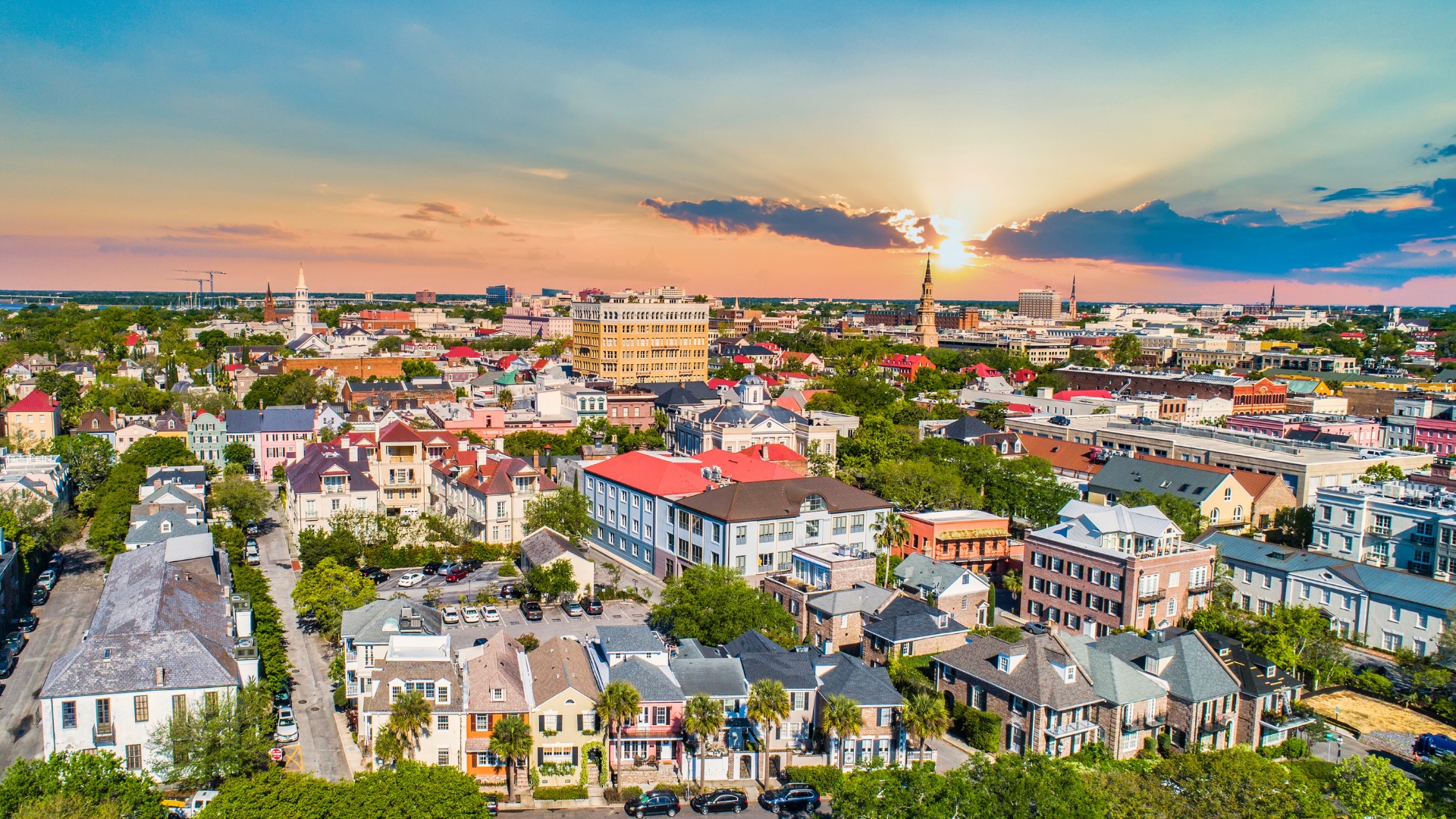
4) Charleston: The Smallest Market With the Biggest Institutional Bet
Charleston is the smallest market in our portfolio by population, and it may be generating the most significant institutional capital commitments of any of our five metros right now.
The headline: Google announced a new $9 billion investment in South Carolina for 2026–2027 to expand its cloud and artificial intelligence infrastructure, building on two data center campuses already under active construction in Dorchester County (Charleston Regional Development Alliance). This follows Google's earlier announcement of $2 billion in data center investment that helped catalyze the broader tech and advanced manufacturing wave now reshaping the region's employment profile (MMG Real Estate Advisors).
The manufacturing story is equally compelling. Boeing remains the anchor, with its 787 Dreamliner final assembly and delivery site in North Charleston representing one of the company's two global assembly locations. Eaton is expanding its aerospace manufacturing presence with a $46 million investment in a new facility producing hydraulic pumps and motors for commercial and defense aerospace platforms. Keel, a defense manufacturer, is investing $67 million in a Charleston County expansion expected to create 170 new jobs. Maars North America has established its first U.S. production operation in the region. Mercedes-Benz Vans operates its U.S. plant in Palmetto Commerce Park, having expanded to produce the eSprinter electric van line.
The technology sector has grown more than 90 times since 2001, at a 7.2% annual rate that outpaces the national average of 5.1% (HereCharleston). The tech industry is projected to grow 20% by 2026, creating thousands of high-wage jobs. The average per-capita wage in the Charleston Digital Corridor is $130,522, 2.12 times the regional average, signaling that tech employment in Charleston is not an emerging story but a maturing one.
For apartment investors, Charleston's supply dynamics make the employment story even more powerful. MMG Real Estate Advisors' 2025 Charleston Forecast shows new multifamily construction starts down 72% from peak and completions expected to decline 73% in 2025, setting the stage for significant occupancy gains and rent growth in 2026 and 2027 as supply constraints intensify. The combination of accelerating institutional investment, a diversifying high-wage employment base, and a tightening supply pipeline creates exactly the buy-below-replacement-cost opportunity our strategy is designed to capture.
Investor takeaway: Charleston is a small market punching significantly above its weight in terms of the quality and scale of institutional capital commitments. Google, Boeing, Eaton, Mercedes-Benz, and a wave of defense manufacturers are not investing billions in a market they expect to stagnate. They are investing in a market with a skilled workforce, pro-business policy, a strategic port location, and a quality of life that attracts and retains the talent they need.
In simple terms: Charleston is a smaller city but Google is putting $9 billion there. Boeing builds 787 Dreamliners there. Defense manufacturers are expanding there. When companies that big make that kind of commitment, they're not guessing, they're making calculated long-term bets on a market with a skilled workforce, a growing economy, and a quality of life that attracts the employees they need. That same foundation fills apartments.
5) Dallas–Fort Worth: The Skills-First Economy That Keeps Attracting Employers
Dallas–Fort Worth is the nation's fourth-largest metro, and it is still growing faster than almost any market its size. The Dallas Fed's April 2026 Employment Forecast shows Dallas employment growing 4.8% in the most recent reporting period, the second-fastest rate among major Texas metros. Average hourly wages in the metro climbed to $37.71 as of early 2026, a 6.0% increase year-over-year, significantly outpacing the national wage growth average of 3.8% (Merit America, Bureau of Labor Statistics).
The corporate relocation story that defined DFW's post-pandemic growth is still running. Financial services is the headline sector: Goldman Sachs is building an 800,000-square-foot, $709 million campus in Dallas that will house 5,000 employees upon completion in 2028. Charles Schwab already operates a 500,000-square-foot campus in Westlake with 7,000 workers. The New York Stock Exchange and NASDAQ have regional offices in Dallas as of 2025, and the Texas Stock Exchange is preparing for full operations in early 2026, cementing Dallas's emergence as "Y'all Street", the nation's emerging second financial capital (Dallas Fed).
But DFW's employment diversification extends well beyond finance. Texas Instruments is constructing four 300-millimeter semiconductor wafer fabrication plants in Sherman. The National Association of Manufacturers made North Texas the centerpiece of its 2026 national tour, citing the region's manufacturing momentum. Amazon, Walmart, Target, and Home Depot have all opened or expanded distribution centers, supporting DFW's emergence as a national fulfillment and logistics hub. Matthews' Q1 2026 industrial report confirms 9.4 million square feet of net absorption in DFW's industrial market, with corporate relocations and expansions continuing to drive job creation and economic resilience.
For apartment investors, the DFW jobs picture translates into a renter pool that is broad, diverse, and income-growing. The metro's 4.0% unemployment rate is tight. Wage growth is exceeding national averages. And the pipeline of corporate relocations, 36 cities in the metro have attracted at least one corporate relocation or expansion since 2020, continues to deepen the demand base well into the future (Dallas Regional Chamber).
Investor takeaway: DFW's employment base is not just large, it is diversifying into higher-wage industries in a way that supports the full spectrum of apartment demand from workforce housing through attainable mid-market. The renter pool here is deep, growing, and increasingly well-compensated.
In simple terms: Dallas-Fort Worth keeps attracting major companies from around the country and the world. Goldman Sachs is building a massive new office there. A new stock exchange is opening. Semiconductor plants are going up. All of those employers bring employees who need places to live, and more often than not in the early years of a new job or relocation, those people rent.
6) Houston: Record Employment Despite Energy Headwinds
Houston's economic story in 2026 requires a nuanced read, and the nuance is actually quite favorable for apartment investors. The headline is modest: the Greater Houston Partnership forecasts 30,900 new jobs in 2026, below Houston's recent average of 50,000 annually. The reason is specific: oil prices declining from the Middle East conflict peak are reducing upstream energy sector hiring. But the sectors that actually drive apartment demand in Houston are performing well.
Healthcare and social assistance are expected to account for nearly half of all new Houston jobs in 2026, approximately 14,000 new positions, driven by strong population growth, an aging demographic, and an expanding insured workforce (Greater Houston Partnership, CultureMap Houston). Professional and business services added 4,200 jobs in the most recent three-month period, leading all sectors. Construction grew 5.0% year-over-year, reflecting Houston's ongoing infrastructure and real estate development activity (Dallas Fed, February 2026).
The forward indicators are positive. The Houston Purchasing Managers Index reached 52.3 in March 2026, above the expansion threshold of 50, up from 50.2 in December 2025. The Houston Leading Index has risen over the three months ending in January, with most components increasing. Regions Bank Chief Investment Officer Alan McKnight reinforced the outlook: "Texas has consistently outpaced the U.S. economy in real GDP growth, a trend driven by the state's diversified economic base and competitive business climate" (Greater Houston Partnership). Houston is on track to reach a record 3.52 million total jobs by year-end 2026, a milestone that speaks to the depth of the employment base even in a moderated growth year.
For apartment investors, this matters because the sectors driving Houston's job growth, including healthcare, professional services, construction and education, are precisely the workforce housing demand generators that fill Class B apartments. These are essential-economy jobs held by residents earning 80–120% of area median income who are renting by necessity, not by choice. They are the most stable component of any apartment community's resident base.
Investor takeaway: Houston's 2026 job growth is moderate in headline terms but concentrated in the exact sectors that generate durable, necessity-based renter demand. A record total employment base, positive leading indicators, and a diversified economy that has repeatedly demonstrated resilience through oil price cycles make this one of the most dependable demand foundations in the Sun Belt.
In simple terms: Houston's job numbers look a bit slower this year because oil prices fell. But healthcare, professional services, and construction, the industries that fill apartments, are still growing steadily. In fact, Houston is on pace to have more total employed people than ever before by the end of 2026. That's a healthy renter pool, even in a quieter year.
7) The Investment Thesis in One Paragraph
Real estate is a local business. The apartment investor who focuses on national headlines and ignores local employment data is making decisions with the wrong data set. The five markets we operate in are Dallas–Fort Worth, Houston, Atlanta, Tampa, and Charleston, and each offers something that most national headlines cannot see: diverse, growing, necessity-driven employment bases that keep renter pools deep and apartment demand stable across economic cycles. Dallas is building a new financial capital. Houston is approaching record total employment. Atlanta is posting top-five national job growth while simultaneously entering its slowest supply delivery pace in a decade. Tampa is delivering consistency over volatility in a Florida market known for extremes. And Charleston is attracting some of the largest institutional capital commitments in the Southeast, driven by aerospace, defense, and a $9 billion AI infrastructure bet from Google. In each case, the employment story directly and demonstrably supports the apartment investment thesis we are executing on right now.
In simple terms: We didn't pick these five cities at random. We picked them because they have the kinds of diverse, growing economies that keep filling apartments year after year, in good times and in uncertain ones. The jobs data coming out of each of them right now reinforces that we're in the right places.
What We're Watching Next
- Monthly jobs data by metro: The Dallas Fed, Greater Houston Partnership, and Bureau of Labor Statistics release metro-level employment data monthly. We track healthcare, professional services, construction, and technology employment in each market as leading indicators of renter demand.
- Corporate relocation announcements: Each new HQ move or major expansion announcement in our target markets is a forward signal of future renter demand. The pipeline in DFW, Atlanta, and Charleston remains active.
- Google's South Carolina data center timeline: The $9 billion commitment for 2026–2027 is expected to generate significant construction employment, then permanent technology and operations roles, a multi-year demand driver for Charleston multifamily.
- Houston Leading Index: The HLI's continued improvement through Q1 2026 suggests job growth acceleration in the months ahead. If the Purchasing Managers Index holds above 50, Houston's moderate 2026 job forecast may prove conservative.
- Atlanta supply pipeline: With new deliveries falling to the slowest pace in over a decade and job growth in the top five nationally, Atlanta is the market where the supply-demand balance is tipping most favorably in the near term. We are watching vacancy compression data monthly.
Our 2026 Playbook
- Markets: Dallas–Fort Worth, Houston, Atlanta, Tampa, and Charleston are not chosen for trends, but for the durable employment diversity that underpins steady apartment demand through every phase of the economic cycle.
- Acquisition edge: Below replacement cost with day-one or near-term cash flow in submarkets where employment data confirms the renter pool is deep, growing, and income-stable.
- Value creation: Livability-first capex: kitchens, LVP flooring, lighting, bath refresh, smart access, pet amenities, package rooms, safety lighting, and landscaping —improvements that attract employed, quality-conscious renters and keep them through renewals.
- Operations: Renewal-centric mindset, responsive maintenance, transparent fees, and clinical pricing. Residents who chose our markets because of the jobs they hold tend to stay, we operate to make renewal easy.
- Capital structure: Conservative leverage, assumption-first where it makes sense, and multiple exit paths (hold/refi/sell) based on data, not headlines.
Bottom Line
National economic news is noisy right now. But apartment investors don't live in the national economy, they live in specific cities, with specific employers, and specific groups of people who need places to live. Our five markets Dallas-Fort Worth, Houston, Atlanta, Tampa, and Charleston, are all adding jobs, attracting major companies, and building the kind of economic depth that keeps apartments full for years. Dallas is becoming a financial capital. Houston is on pace for record employment. Atlanta is posting top-five job growth in the country. Tampa is delivering steady performance when other Florida markets are volatile. And Charleston has Google betting $9 billion on its future. That's not a national headline story. It's a local story, and it's the one that matters for apartment investors.
👉 We have an active deal available now in one of these markets. Investors on our list get first access to the details.
If you'd like to be added to our investor list to learn more, please schedule a call with our team.



vcfcb.png)



vg.png)

d.png)

2.png)
34.png)
7.png)
ujo.png)
_cost%20of%20living.png)
cdvb.png)
fj.png)
fh.png)
bhn%2C.png)
hn.png)
rt.png)

uj.png)
vfd.png)
vfdnh.png)

bhn.png)

4e.png)
gbtr.png)

mj.png)
nh.png)

klo.png)
_war.png)
mkj%20(2).png)


ggj.png)

p.png)

ok.png)
-n%5D.png)