There is a policy debate playing out across the United States right now that every multifamily investor needs to follow closely, not because it threatens our portfolio, but because it is actively transferring value toward the markets where we operate and away from the markets that are making a different choice.
Rent control is making its most aggressive national comeback in decades. Driven by a genuine housing affordability crisis and a political environment that has made rent caps electorally popular, 131 active rent control bills are working their way through state legislatures and city councils across the country (National Apartment Association, Fall 2025). Washington State has already passed a new rent cap law. Massachusetts is heading to a statewide ballot vote in November 2026. New York City has a new mayor committed to expanding stabilization. And a growing body of real-world data, most dramatically from Montgomery County, Maryland, is showing exactly what happens when these policies take effect.
For apartment investors, this story has two dimensions. The first is risk, understanding which markets are exposed to rent control and what that exposure means for valuations, financing, and exit strategies. The second is opportunity, understanding why the regulatory divergence between rent-controlled markets and landlord-friendly Sun Belt states is creating a durable and growing competitive advantage for investors in the right markets. Both dimensions point to the same conclusion: our market selection is not just good economics, it is increasingly good policy positioning.
1) The Rent Control Wave: What's Happening and Where
To understand the current landscape, it helps to know exactly what "rent control" covers. The term includes a spectrum of policies: traditional rent control (hard caps on the rent itself), rent stabilization (caps on annual increases, usually tied to CPI or a fixed percentage), and rent stabilization with vacancy decontrol (allows resets when tenants leave). What they share is a common mechanism, limiting the rate at which landlords can increase rents in occupied units. And what they share in their economic consequences is also remarkably consistent, more on that shortly.
Here is the current national picture:
- National legislation pipeline: The NAA's Fall 2025 Rent Control Outlook counts 131 active rent control bills across the country, plus approximately 40 failed proposals expected to be reintroduced. This is the most active legislative environment the NAA has tracked since it began systematic monitoring. The geographic spread is notable: bills are active in states that had no rent control history as recently as 10 years ago.
- Washington State (passed, in effect): In 2025, Washington's legislature passed EHB 1217, which caps annual rent increases at 10% plus CPI, requires 90 days' notice before any increase, and restricts fees and security deposits (NAIOP Washington State). The law is now in effect. Early signals from the Seattle metro show developer enthusiasm cooling, with new project announcements slowing in the first months of implementation.
- Massachusetts (ballot initiative, November 2026): The 'Keep Massachusetts Home' coalition submitted 124,000+ signatures to put statewide rent control before voters in November 2026 (Ballotpedia, November 2025). The proposal would cap annual rent increases statewide at the lower of CPI or 5%, apply to all 351 cities and towns in the Commonwealth without local option, and most striking set January 31, 2026 as the baseline rent that all future caps are measured from. That baseline was set before voters even decide. The Massachusetts precedent matters nationally: the state banned rent control via ballot measure in 1994, and its potential reinstatement would be a signal to other states that previous rejections are not permanent.
- New York City (new mayor, expansion expected): NYC recently elected a mayor who campaigned explicitly on expanding rent stabilization. As Commercial Observer noted in January 2026, New York remains one of the most heavily regulated rental markets in the country, and the new administration is expected to push stabilization further, not ease it.
- Oregon (strengthened, 2025): Oregon strengthened its 2019 rent control law in 2025, tightening the existing cap structure and adding additional tenant protections (HousingWire, December 2025).
- New Jersey, Maryland, California: Passaic, N.J. halved allowable rent increases to 3% annually. Montgomery County, Maryland passed a stabilization law in July 2024 whose consequences we will examine in detail below. California continues to see active local ordinances, with Santa Barbara implementing a temporary rent freeze in early 2026 as the city drafts a permanent cap (Multifamily Dive, January 2026).
Investor takeaway: The rent control wave is not a coastal fringe story, it is a national policy movement accelerating through both blue and purple states. Understanding the geographic distribution of this risk is now a core underwriting requirement for any multifamily investor evaluating market selection.
In simple terms: Rent control used to be a policy you only worried about in New York or San Francisco. That's no longer true. It's spreading to new states, new cities, and new kinds of markets. If you own apartments in a city where rent control passes, the government limits how much you can raise rents, even if your costs are going up. For investors thinking about where to put money, whether a market has rent control, or is at risk of getting it, has become one of the most important questions to ask.
2) What Actually Happens When Rent Control Arrives: The Montgomery County Case Study
The most important piece of evidence in the current rent control debate is not academic, it is happening in real time in one of the wealthiest counties in the United States, and the data is unambiguous.
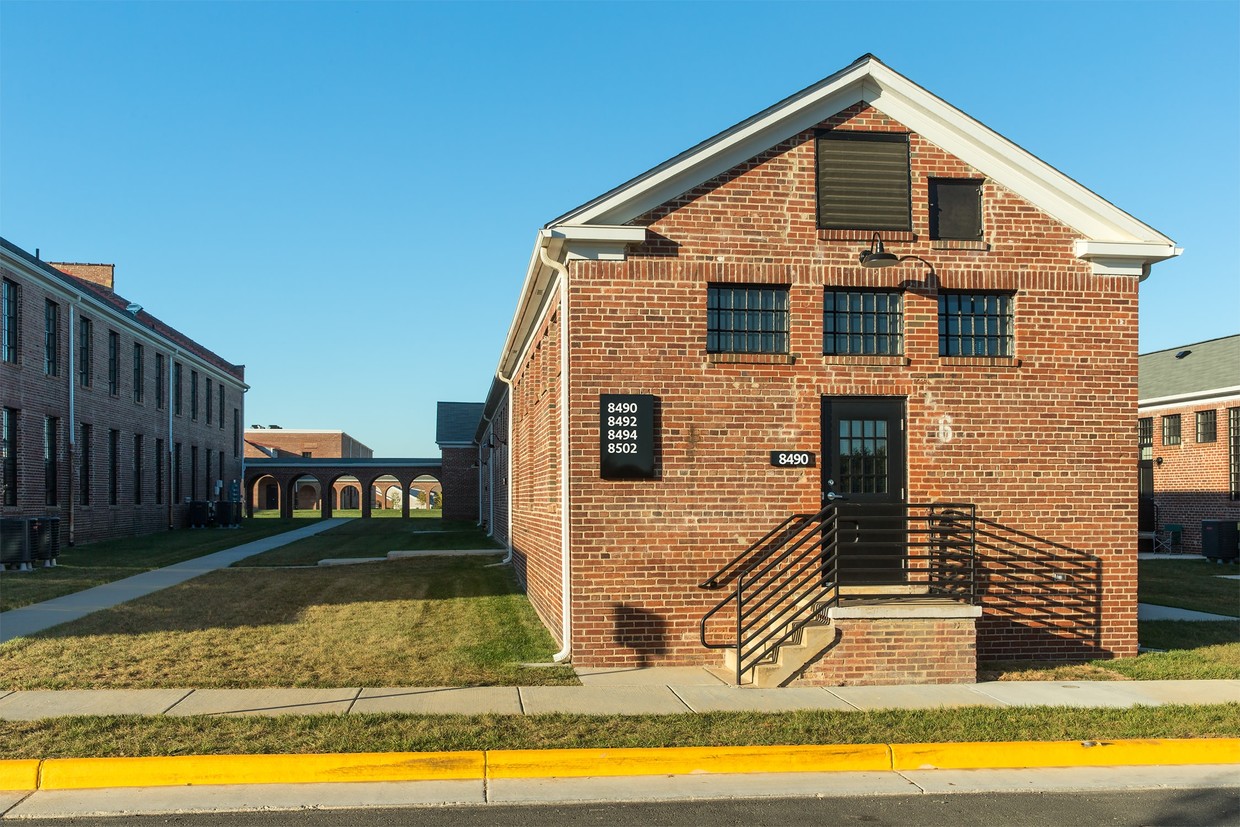
Montgomery County, Maryland, a suburb of Washington, D.C. with a median household income among the highest in the nation, passed a rent stabilization law that took effect in July 2024. The law limits annual rent increases to the lower of 3% or CPI plus 3% (approximately 5.7% in 2025), with a 23-year exemption for newly constructed buildings. County planners, investors, and developers explicitly noted this exemption was designed to protect the construction pipeline.
It did not work. Here is what the county's own data shows:
- In the first eight months of 2024, before rent control took effect, Montgomery County issued 2,093 multifamily building permits. That figure nearly matched the combined total of every other county in Maryland during the same period.
- In the first eight months of 2025, after rent control took effect Montgomery County issued 54 multifamily permits. A 97% decline. In the same period, the rest of Maryland issued 2,248permits, essentially unchanged.
- Quarterly data shows the collapse was nearly immediate: Q4 2024 saw 8 permits. Q1 2025 saw 7. Q2 2025 saw 23.In the seven quarters prior to rent control, the range had been 284 to 1,240per quarter.
- The county's own planning department described the situation as: "Three consecutive quarters, that's over nine straight months of very low, basically zero, rental multifamily housing permitting, which is very concerning." They formally recommended the county council update the law.
- The nation's financial community effectively redlined Montgomery County for rental housing project financing. As the county planning staff confirmed: "developers have told planning staff that rent control prevents them from getting project funding." (Montgomery Perspective, January 2026; NAIOP Maryland)
Rental housing economist Jay Parsons, who brought this data to wide attention in a widely-shared LinkedIn analysis, summarized it directly: "Rent control crushed MoCo's development pipeline." (HousingWire, Davis Vanguard, December 2025). He noted that while other Maryland jurisdictions- D.C., Fairfax and Loudoun were each permitting hundreds or thousands of units in the same period, Montgomery County was producing essentially nothing.
Montgomery County is not an outlier. It is the latest entry in a consistent pattern:
- St. Paul, Minnesota: After adopting a strict 3% rent cap in 2021, new multifamily housing development fell 73% (NAIOP data, cited across multiple sources). St. Paul's experience is now routinely cited by housing economists as a cautionary case.
- Massachusetts's own history: The state banned rent control by ballot measure in 1994 after voters witnessed its consequences firsthand: housing quality decline, reduced supply, misallocation of units to residents regardless of income need. The current ballot initiative would reverse that decision and opponents are explicitly pointing to Montgomery County as evidence of what the consequences would look like (MassLandlords, January 2026).
- Academic consensus: A 2024 survey of global rent control studies by economist Konstantin Kholodilin found that while rent control improves affordability for tenants currently in regulated units, it consistently generates reduced construction of new rental housing, conversion of rentals to other uses, and misallocation of units (Davis Vanguard, December 2025). A 2025 California study found jurisdictions with stricter rent regulations tended to have higher median rents and higher shares of cost-burdened renters overall, the opposite of their stated goal.
Investor takeaway: The Montgomery County data is not an argument, it is evidence. A 97% permit collapse in one of the wealthiest, most educated, most supply-friendly counties in the United States, confirmed by the county's own planning department, in a single year, while neighboring jurisdictions continued developing normally. The mechanism is clear, rent control reduces the expected return on new construction, raises underwriting risk, and causes lenders and equity providers to deploy capital elsewhere. The policy's intended beneficiaries, renters who need more affordable housing are made worse off by the supply destruction it reliably produces.
In simple terms: Montgomery County, Maryland is one of the richest counties in America and when it passed rent control, apartment construction essentially stopped. Developers couldn't get financing. Investors moved their money elsewhere. In one year, permits dropped 97%, while neighboring counties continued building normally. This isn't a theory about what rent control does. It's real data, confirmed by the county's own planners, showing exactly what happens. Fewer apartments get built. The housing shortage gets worse. And ironically, the people rent control was meant to help renters end up with fewer options, not more.
3) Why This Makes Landlord-Friendly Markets More Valuable, Not Just "Nice to Have"
The rent control wave doesn't just create risk in markets where it passes. It creates opportunity in the markets that don't, by redirecting capital, compressing supply in controlled markets, and sharpening the relative advantage of regulatory environments that welcome investment.
Here's how the dynamic works:
Capital migrates to predictable returns. When rent control passes in a market, investors face a fundamental underwriting problem: the exit cap rate for a future sale must account for the rent control environment that buyer will inherit. If future rent growth is capped, the NOI ceiling is lower, and the price a buyer will pay is lower. Lenders recognize this and reduce financing availability in controlled markets, as Montgomery County's experience directly confirmed. That capital doesn't disappear; it seeks markets where annual lease resets are unrestricted and future buyers can underwrite without a regulatory ceiling on income growth. That means our markets.
Supply destruction in controlled markets deepens demand everywhere else. When development collapses in a rent-controlled market, as it did in Montgomery County at 97% and St. Paul at 73%, the renters who would have lived in those unbuilt apartments still need housing. Some of them move. The markets they move to, typically Sun Belt metros with job growth, affordability, and a regulatory environment that doesn't penalize development, absorb that demand. Our markets are structurally positioned to receive that overflow.
The premium for certainty grows over time. As rent control spreads to more markets, the scarcity premium for landlord-friendly markets compounds. There are only so many large, growing, job-rich metro areas with no rent control, no income tax, low property taxes, and a legal system that respects property rights. As the list of such markets shrinks, either because they adopt rent control or because investors crowd into them, the relative value of being in those markets early rises.
Boston is a live example right now. As GlobeSt reported in February 2026, investors in Greater Boston, one of the strongest multifamily markets in the country by fundamentals, are already pausing acquisition decisions in anticipation of a November 2026 ballot vote. Marcus & Millichap's Managing Director Thomas Shihadeh stated directly: "That's impacting investors' decisions to buy the properties and how to really value whether it makes sense to invest in improving them." Capital that would have gone to Boston is going somewhere else, and the somewhere else is markets like ours.
Investor takeaway: The rent control wave is not just a risk to monitor in other people's markets. It is an active catalyst for capital reallocation toward landlord-friendly markets. Every city that passes rent control is implicitly advertising the markets that haven't as more attractive alternatives. For investors already in Texas, Georgia, Florida, and the Carolinas, the spread of rent control in other markets is a durable competitive advantage that compounds as the regulatory divergence widens.
In simple terms: When Boston investors stop buying because they're scared of rent control, that money doesn't disappear. It goes to cities where the rules are clear and the government isn't trying to cap what you can charge for rent. Every city that passes rent control makes the cities that don't more attractive. Our markets have been making that choice consistently, and investors are beginning to recognize it.
4) Our Five Markets: The Landlord-Friendly Regulatory Advantage, Documented
Every one of our target markets has made a clear, documented policy choice to protect property rights and maintain a regulatory environment that welcomes apartment investment. Here is the specific legal landscape in each:
- Texas (DFW and Houston): Texas prohibits rent control statewide by law. No city or county may impose rent caps under any circumstances. The state has no income tax, landlords face no mandatory licensing or registration requirements, and eviction timelines average just 25–35 days, among the fastest in the nation (HonestCasa, DealMachine, Steadily, all 2026). Texas ranks consistently among the top two landlord-friendly states in national surveys. Dallas has logged its 100th corporate relocation since 2018 (CRE Daily, April 2026), each one generating renter demand in a regulatory environment that makes it viable to meet that demand.
- Florida (Tampa): Florida state law blocks cities from implementing rent limits except during declared housing emergencies, a narrow carve-out that has never been used in Tampa. The state has no income tax, property taxes run below the national average, and a landlord needs only a 3-day notice before filing for eviction for non-payment. Florida consistently ranks among the top landlord-friendly states nationally (RentToRetirement, RealEstateSkills, DealMachine, all 2026). Tampa specifically benefits from domestic in-migration, diversified employment, and a supply pipeline that is more manageable than Miami or Fort Lauderdale, making it the most durable Florida market in our portfolio.
- Georgia (Atlanta): Georgia preempts local rent control, cities cannot pass their own caps, has no limits on security deposits or late fees, and features what HonestCasa describes as "possibly the fastest eviction process in America," with the full process completable under 30 days for uncontested cases. Property taxes run under 1%, the state income tax burden is modest, and Atlanta's employment base is the fourth-fastest-growing metro nationally for job creation (Marcus & Millichap, 2026). Georgia's legal framework is not just landlord-friendly, it is investor-friendly in the most complete sense: low friction, low taxes, fast resolution.
- South Carolina (Charleston): South Carolina has no rent control at any level, state or local. Property taxes are among the lowest in the nation at 0.56–0.57% (SoldFast, 2026). Evictions are fast and low-friction, typically resolved within 3–6 weeks for uncontested cases. South Carolina ranks as an "honorable mention" climbing into top-tier landlord-friendly status (RealEstateSkills, 2026), driven by population growth, fastest in the nation at 1.5% in 2025 (Census Vintage 2025), and a wave of corporate investment anchored by Google's $9 billion data center commitment for 2026–2027 (CRDA). Charleston specifically combines corporate relocation activity, an expanding port economy, and a quality-of-life draw that consistently attracts professional renters.
The contrast with rent-controlled markets is stark. Where Montgomery County now requires county planning approval before exceeding certain rent thresholds, our markets require nothing more than a lease agreement signed by two willing parties. Where Boston investors are pricing November 2026 ballot risk into their cap rate assumptions, our investors price in certainty, a predictable regulatory environment where the exit market in Year 5 will look structurally similar to the acquisition market today.
Investor takeaway: The landlord-friendly status of our five markets is not a passive benefit, it is an active competitive advantage that is becoming more valuable as rent control spreads. The regulatory moat around Texas, Florida, Georgia, and South Carolina is deep, documented, and widening relative to the markets losing investor confidence to rent control risk.
In simple terms: Every state where we operate has made a clear decision: the government doesn't cap what landlords can charge for rent. That's not just nice to have, it means investors can plan with confidence, developers keep building, and the housing stock keeps improving. Compared to states where rent control is spreading, that's a genuine competitive advantage that grows as the gap widens.
5) What Rent Control Actually Does to the Housing Market, And Why It Keeps Failing
The persistence of rent control as a political idea, despite its consistent failure as a housing policy, reflects a fundamental tension between short-term political benefits and long-term economic consequences. Understanding that tension is important context for any investor evaluating regulatory risk.
The short-term political appeal is real. Residents who are currently in rent-controlled units benefit directly and tangibly. Those benefits are visible, immediate, and emotionally resonant, particularly in cities where housing costs have outpaced income growth for decades. The political constituency for rent control is real, motivated, and organized.
The long-term economic harm is equally real, but it is diffuse, delayed, and falls on people who don't yet exist as renters in the market. The new resident who can't find an apartment because the developer decided not to build doesn't know why their search is taking months. The existing resident who can't move because a neighbor is paying 2010 rents in a 2026 market can't see the market-wide misallocation happening. The harm is structural and statistical, exactly the kind of harm that loses political battles even as it wins economic arguments.
NAIOP's Spring 2026 analysis of the Massachusetts situation puts the case clearly: "What can slow rent growth in a positive manner is the production of more units. In Austin, Texas, where 10,000 new apartments have come online since 2022, rents fell 6% from 2023 to 2024. In Phoenix, where multifamily construction boomed postpandemic, rents have fallen 4% year over year." The evidence is consistent across markets: supply creation reduces rents more reliably than supply restriction, and rent control reliably reduces supply creation.
Jay Parsons, citing Montgomery County data at the start of the Massachusetts debate, framed the investor logic precisely: a new construction exemption, even a generous 23-year one, doesn't fully protect the development pipeline because "every investor is concerned about exit strategy." A time-limited exemption still depresses valuations because future buyers must underwrite the moment rent control takes effect. Risk to exit strategy is risk to current value and that risk shows up in permit applications before a single unit is built.
Investor takeaway: Rent control is not going away as a political movement, the conditions that produce it (affordability crisis, income inequality, housing shortage) are getting worse, not better. The relevant question for investors is not whether to debate housing policy, but whether their portfolio is positioned in markets where the regulatory risk is minimal and the investment environment rewards long-term capital commitment. Ours is.
In simple terms: Politicians like rent control because it helps current renters right now. But economists and the data agree: over time, it makes housing scarcer by discouraging investment and new construction. The cities that have tried it, New York, San Francisco, now Montgomery County, St. Paul, all ended up with fewer apartments and higher costs for people trying to find housing. The cities that instead focused on building more housing, Austin and Phoenix actually saw rents fall. The lesson is clear. We've built our portfolio in the cities that are choosing the approach that works.
6) The Bottom Line for Our Portfolio Strategy
The rent control story is not a sideshow to our investment thesis, it is a direct confirmation of it. Here is how the pieces connect:
- Market selection protects value. By operating exclusively in Texas, Florida, Georgia, and South Carolina, all of which have preempted or prohibited rent control at the state level, we have zero current rent control exposure in our portfolio. That is not accidental. It is a deliberate choice that reflects our understanding of the regulatory environment as a core component of investment risk.
- Capital inflows strengthen our position. As rent control spreads and investors exit markets like Boston, Seattle, and Oregon, the capital seeking landlord-friendly alternatives concentrates in a smaller set of markets. Our markets are the natural beneficiaries of that reallocation, receiving both the capital and the continued renter demand that follows job growth and population inflows.
- Operational certainty is a competitive advantage. In a market where we can execute annual lease resets to market rate, absorb cost increases through pricing, and invest capex in renovations that we know we can monetize without regulatory interference, our value-add strategy works as designed. In a rent-controlled market, the same investment might produce the same renovation but cap the rent premium it can generate, fundamentally altering the return profile.
- Below-replacement-cost basis + no rent control = compounding advantage. In our markets, if we acquire below replacement cost and renovation costs continue rising due to tariffs and labor pressure, our basis advantage grows. If rent control were present, that basis advantage would be partially offset by income ceiling risk. Without it, the full margin of safety compounds with every passing year.
Investor takeaway: The rent control wave is evidence for our market selection, not a challenge to it. We are operating in the regulatory environment that institutional research, economic data, and real-world permit outcomes all confirm as the most investment-supportive in the country. And as that environment becomes rarer relative to the markets where rent control is spreading, its premium value compounds.
In simple terms: Everything we've built our strategy around, buying below replacement cost, renovating to create rent premiums, operating for renewals, requires a regulatory environment that lets us price our apartments at market rates. Our five markets guarantee that. As more cities choose a different path, the markets that don't become more valuable. We're already there.
7) What We're Watching Next
- Massachusetts November 2026 ballot vote: This is the most consequential near-term rent control event nationally. A yes vote would impose the nation's most restrictive statewide rent control law and likely trigger acceleration in other states. A no vote would deal a significant blow to the movement's momentum, Massachusetts already rejected rent control once in 1994.
- Washington State implementation data: Early signals from the Seattle metro will give the clearest near-term read on how a 10%+CPI cap affects new development appetite in a major market. Watch permit data over the next two quarters.
- NAA legislative tracker: The NAA's rent control bill count (currently 131) is updated regularly. Any acceleration in new bill introductions, particularly in states adjacent to our markets, would be an early warning signal worth monitoring.
- Montgomery County update: The county's own planning department recommended updating the law. If the council modifies the rent stabilization ordinance to reduce its development-chilling effect, the data on recovery speed will be instructive for other markets.
- Capital market flows to Sun Belt: MSCI and CBRE track cross-border capital flows quarterly. We expect continued evidence of capital migration from high-regulatory markets toward landlord-friendly alternatives. Any acceleration in this trend reinforces the market selection premium we're already capturing.
8) Our 2026 Playbook
- Markets: Dallas–Fort Worth, Houston, Atlanta, Tampa, Charleston — each operating under state-level preemption or prohibition of rent control, with landlord-friendly eviction timelines, low or no state income tax, and low property taxes.
- Acquisition edge: Below replacement cost with day-one or near-term cash flow. In markets with no rent ceiling, our renovation premium compounds without regulatory interference.
- Value creation: Livability-first capex: kitchens, LVP flooring, lighting, bath refresh, smart access, pet amenities, package rooms, safety lighting, and landscaping. In landlord-friendly markets, every dollar of improvement can be reflected in market-rate pricing.
- Operations: Renewal-centric mindset, responsive maintenance, transparent fees, and clinical pricing. Operating for renewals rather than giveaways is both financially and strategically correct, and in our markets, there is no regulatory penalty for pricing to market.
- Capital structure: Conservative leverage, assumption-first where it makes sense, and multiple exit paths (hold/refi/sell) based on data, not headlines.
Bottom Line
Rent control is spreading across America, Washington State passed a new cap law, Massachusetts is voting on statewide rent control in November 2026, New York City is expanding stabilization, and 131 rent control bills are active in legislatures across the country. The data on what happens when rent control arrives is now crystal clear: in Montgomery County, Maryland, apartment building permits collapsed 97% in a single year after rent control took effect, while neighboring counties continued building normally. In St. Paul, Minnesota, a 3% rent cap triggered a 73% drop in new multifamily development. Rent control consistently makes the housing shortage worse, not better, by discouraging the investment and construction that actually creates affordable housing. Our five markets: Texas, Florida, Georgia, and South Carolina have all made the opposite choice. They prohibit or preempt rent control by state law, keep taxes low, and maintain legal systems that protect property rights. As rent control spreads to more cities, the markets that don't have it become more valuable. Capital that leaves Boston or Seattle or Oregon has to go somewhere, and the most natural destination is exactly where we've been operating all along.
👉 We have an active investment opportunity available now in one of these markets. Investors on our list get first access to the details.
If you'd like to be added to our investor list to learn more, please schedule a call with our team.



bhn.png)



vg.png)

d.png)

2.png)
34.png)
7.png)
ujo.png)
_cost%20of%20living.png)
cdvb.png)
fj.png)
fh.png)
bhn%2C.png)
hn.png)
rt.png)

uj.png)
vfd.png)
vfdnh.png)
4e.png)
vcfcb.png)
gbtr.png)

mj.png)
nh.png)

klo.png)
_war.png)
mkj%20(2).png)


ggj.png)

p.png)

ok.png)
-n%5D.png)