Your 2026 Financial Plan: Diversify on Purpose, Add Hard Assets, Sleep Better
|
DEC 04, 2025
|
Most investors don’t suffer from lack of ideas—they suffer from too many unconnected ideas. A good 2026 plan is simple:
1. Decide what you want your money to do (income, growth, resilience).
2. Own assets that do those jobs in different ways.
3. Rebalance by rule, not by mood.
Why diversification still matters (especially now)
Diversification isn’t about squeezing every last basis point. It’s about reducing the chance that one surprise derails the entire plan. That matters in 2026 because the list of “unknowns” is long: rates, elections, supply pipelines, global shocks. When some assets zig while others zag—or simply don’t move as much—your outcomes get more predictable.
Why a blend of public and private is prudent
Public markets give you liquidity, efficient pricing, and long-term growth. You can adjust quickly, harvest losses, and rebalance with a click. The trade-off? Public markets are emotional. Headlines move prices more than fundamentals in the short run.
Private markets (like cash-flowing multifamily) give you tangible income and less day-to-day noise. Value creation is hands-on: buy right, improve units and operations, lift NOI. The trade-off? Less liquidity and a defined hold. That discipline can be a feature, not a bug—it keeps you invested through the compounding.
Put them together and you get agility + stability. You can trim or add public exposure as conditions change while your private sleeve quietly sends income and builds value.
Why hard assets belong in every plan during uncertainty
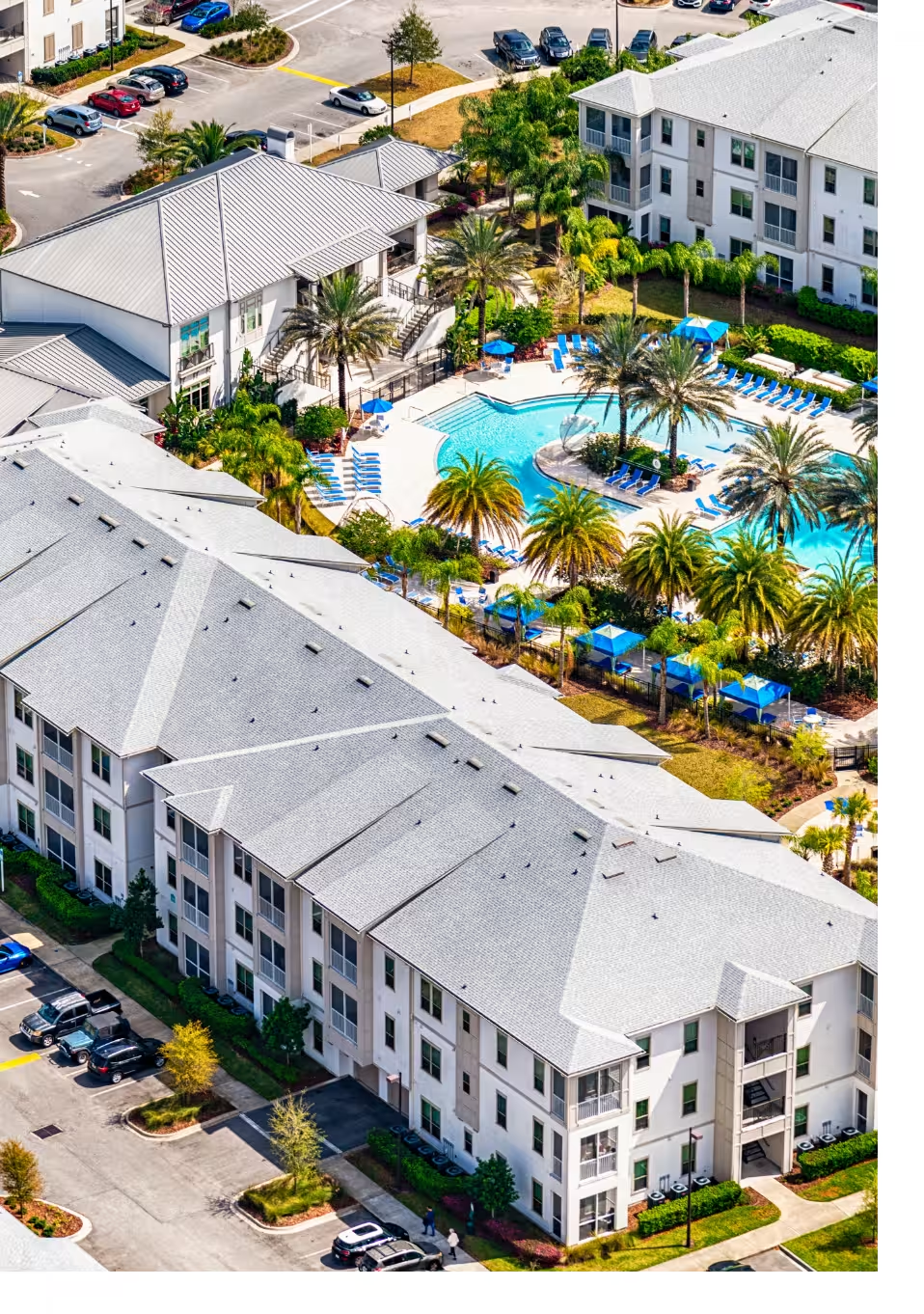
Hard assets are things people use. They’re not just stories on a screen. Apartment communities are the clearest example:
➤ Everyday demand: People must live somewhere in good times and bad.
➤ Controllable value: Upgrading livability—kitchens, durable flooring, lighting, smart entry, pet areas, package rooms—supports rent without chasing fads.
➤ Below replacement cost: Buying existing communities for less than it costs to build new adds a margin of safety.
➤ Multiple levers: You can improve occupancy, resident experience, expense discipline, and eventually refinance or sell when the data says it’s time.
When public markets get choppy, a steady check from real property helps you stay the course elsewhere in your portfolio.
A simple structure for 2026 (example framework, not advice)
Consider organizing your plan into three “jobs”:
➤ Core Liquidity (cash/near-cash): 6–12 months of personal + investing needs. This keeps you from selling good assets at bad times.
➤ Public Growth (stocks/ETFs): Your long-term upside engine. Dollar-cost average, harvest losses when they appear, and rebalance on a schedule.
➤ Private Income (value-add apartments): A calm center—predictable cash flow, measured improvements, and lower daily volatility.
For Canadians allocating south of the border, decide your CAD↔USD approach up front:
➤ Keep USD distributions in USD as a natural hedge
➤ Convert monthly to average the rate over time
What to look for in a private real estate partner
➤ Basis: Are they buying below replacement cost?
➤ Plan: Does the capex improve what residents actually use?
➤ Ops: Do they operate for renewals, not just new leases?
➤ Leverage: Is debt sized for resilience, not perfection?
➤ Reporting: Do you get clear monthly/quarterly updates with rent rolls, capex, and KPIs?
➤ Track record: Actual rent lifts, on-time renovations, and distributions that match the business plan.
How we run it at Faris Capital Partners
We focus on value-add multifamily in Atlanta, Tampa, Charleston, Dallas–Fort Worth, and Houston. Our edge is simple and repeatable:
➤ Buy below replacement cost in job-growth, landlord-friendly metros.
➤ Upgrade for livability: kitchens, LVP flooring, lighting, smart access, pet spaces, package solutions, safety lighting, landscaping.
➤ Operate tight: clean, well-lit communities; proactive maintenance; transparent fees; renewal-first mindset.
➤ Conservative underwriting: day-one or near-term cash flow, realistic rent deltas, and multiple exit paths (hold/refi/sell) based on data, not hope.
The bottom line for 2026
You don’t need to guess the economy. You need a system that works through the economy. A blend of public and private assets, anchored by hard-asset income from real estate, gives you that. It’s diversification you can actually feel.
👉 If you’d like to be added to our investor list to see future opportunities like this one, please schedule a call with our team.
Our mission is to help investors thrive regardless of what’s happening in the market.
If you’re feeling overwhelmed by economic uncertainty, let’s talk about how real estate can add clarity and confidence to your portfolio.
Ready to connect?
Book a call with our investor relations team today to learn more about current investment opportunities.
Have a question?
Please use the form below to contact us. We will never spam you, or sell your email to third parties.
Be the First to Know!
Sign-up for our exclusive new deal alerts and never miss out on exciting opportunities again.
Be the First to Know!
Sign-up for our exclusive new deal alerts and never miss out on exciting opportunities again.
Sign-up for Our Full Out® 7-Day Multifamily Wealth-Building Investment Course
Learn the ins and outs of multifamily investing with Mark Faris with lessons delivered to your inbox daily, for FREE!
Get Started
Be the First to Know!
Sign-up for our exclusive new deal alerts and never miss out on exciting opportunities again.
Send a Referral
Do you know someone who would be a great fit to invest with Faris Capital Partners? Enter your, and the referral’s, information below and we will contact them within 1 business day.